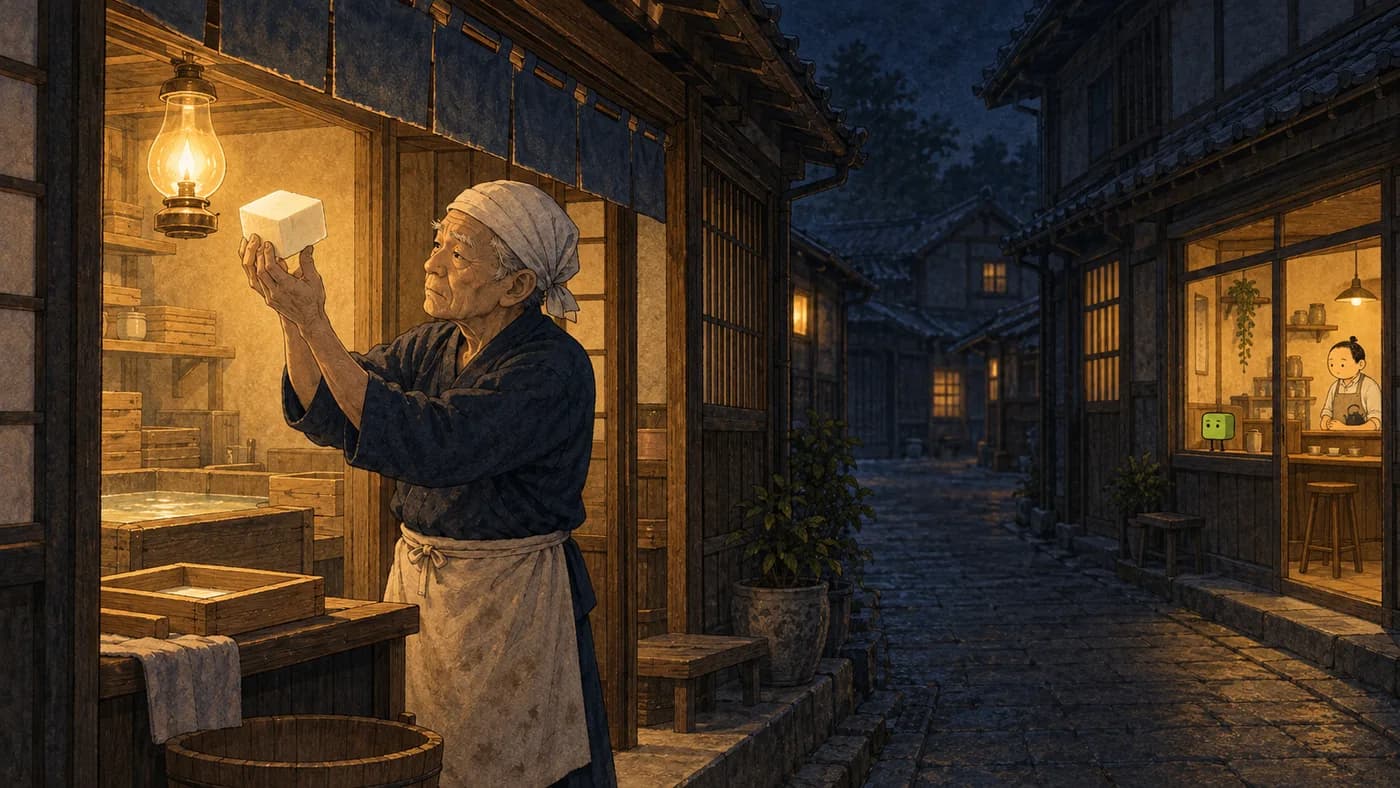
Kobayashi-san opens his shop at four in the morning, as his father did, and his grandfather before that. He is the grumpiest man on our street, and everyone knows the grumpiness is armour, worn over the softest heart in the neighbourhood. Much, I have always thought, like his tofu.
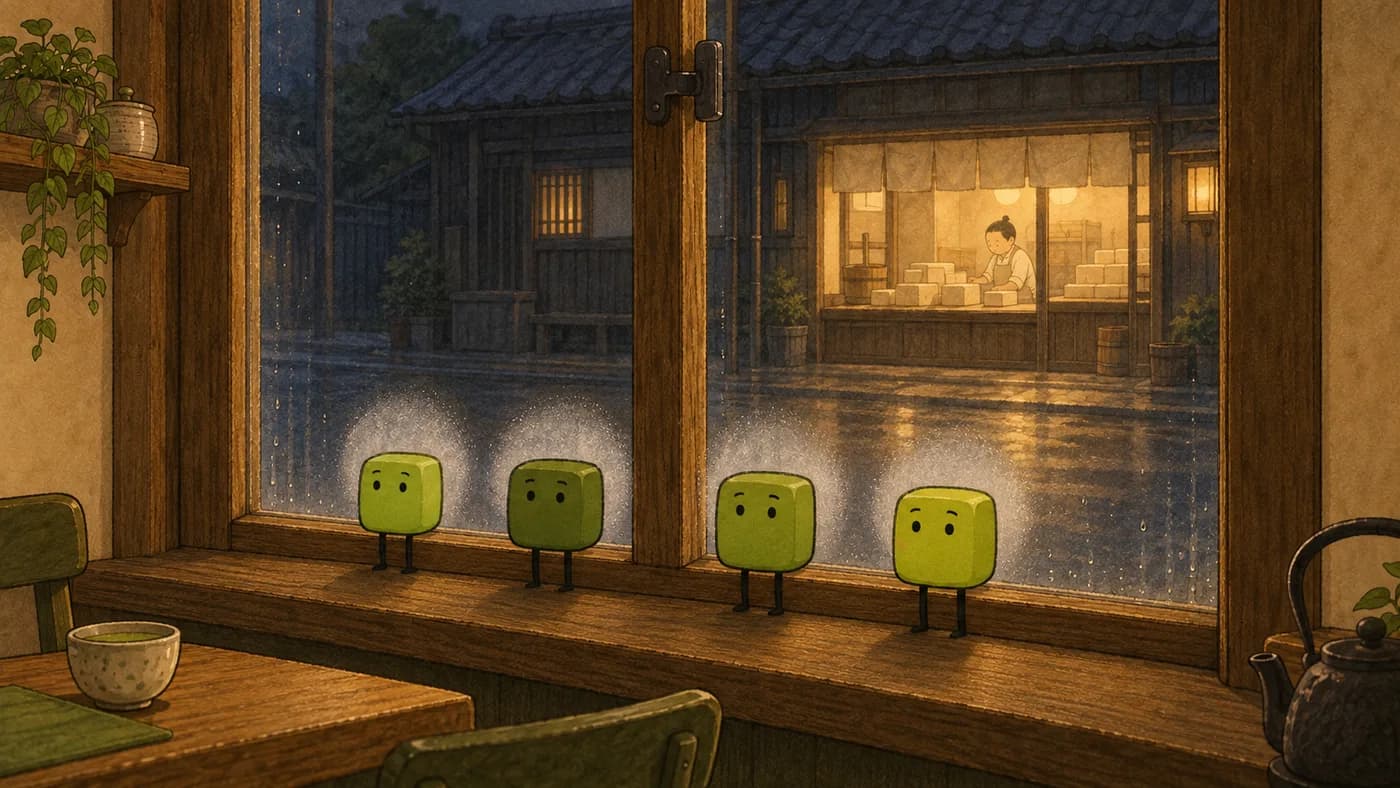
Kobayashi-san’s workshop wakes before the rest of the street. Oil-lamp light finds his hands, the wooden tray, and the pale block of tofu he lifts to inspect. Across the lane, the café window glows. Four Matji press close to the glass, watching the man work.
He turns the tofu towards the lamp, studies its surface, and lowers it again. The Matji lean in the same direction. They cannot know his measurements, but they recognise the pause before a craftsperson decides whether a thing is ready.
Mutjo notices them at the window and leaves them there. The lane is cold; the workshop is warm. Between the two places, attention passes more easily than conversation.
The first bowl appears on the tofu maker’s low step at dawn. It is plain, deliberately so. Kobayashi-san opens the door, scowls at it, tests the temperature, and drinks while still scowling. From the café window, the four Matji tilt towards him.
That afternoon a smooth block of silken tofu rests in a wooden tray on the café counter. The Matji inspect its edge, top, and corners through small body tilts. Mutjo waits. Their approval is quiet but unanimous.
For a week, the exchange repeats: matcha at dawn, tofu at afternoon. The offerings change by degrees. A flower appears once in the foam. A tofu edge grows cleaner. Neither giver acknowledges the arrangement, but both adjust their craft as if the other were an exacting customer.
It is a quieter form of rivalry, the sort that leaves the street better fed. Mutjo begins waking a little earlier. Kobayashi-san keeps the lamp lit a little longer. The Matji watch both windows and learn that standards can be a way of saying thank you.
On Friday the brass bell rings after nine years of silence. Kobayashi-san stands at the café doorway. Mutjo freezes. The four Matji freeze more completely, arranged in a straight row beneath the counter light.
Kobayashi-san drinks his matcha standing up. He examines the foam as though it has been brought before a court. The Matji remain reverent. Mutjo waits with both hands resting on the counter.
Acceptable, Kobayashi-san says. The word is dry, brief, and generous enough to fill the room. Mutjo receives it like a medal. No frame is required; the sentence has already found its place.
At the door, Kobayashi-san gives a small human gesture and turns back towards the lane. Mutjo’s face brightens. The four Matji perform their ceremonial bounce only after the door closes.
Kobayashi-san does not smile when he drinks. He sets the bowl down exactly where he found it and looks once towards the window. The Matji are there, pressed to the glass. For a moment the two shops share the same silence, each waiting for the other to admit that the exchange has become part of the day.
In the following mornings, Kobayashi-san’s door opens to find the bowl waiting. He never looks across the lane immediately. First he lifts the cup, checks the foam, and drinks. Only after setting it down does he glance towards the café window. The Matji have learned to wait for this moment.
Mutjo receives each tofu block with the same care Kobayashi-san gives the matcha. He does not cut it until the Matji have inspected the tray. Their approval has become part of the preparation, as ordinary as warming the bowl.
That evening the tofu workshop and the café face one another across the dark lane. Two windows glow. The standard has risen on both sides, and the armour remains in place, now with a little light showing through.