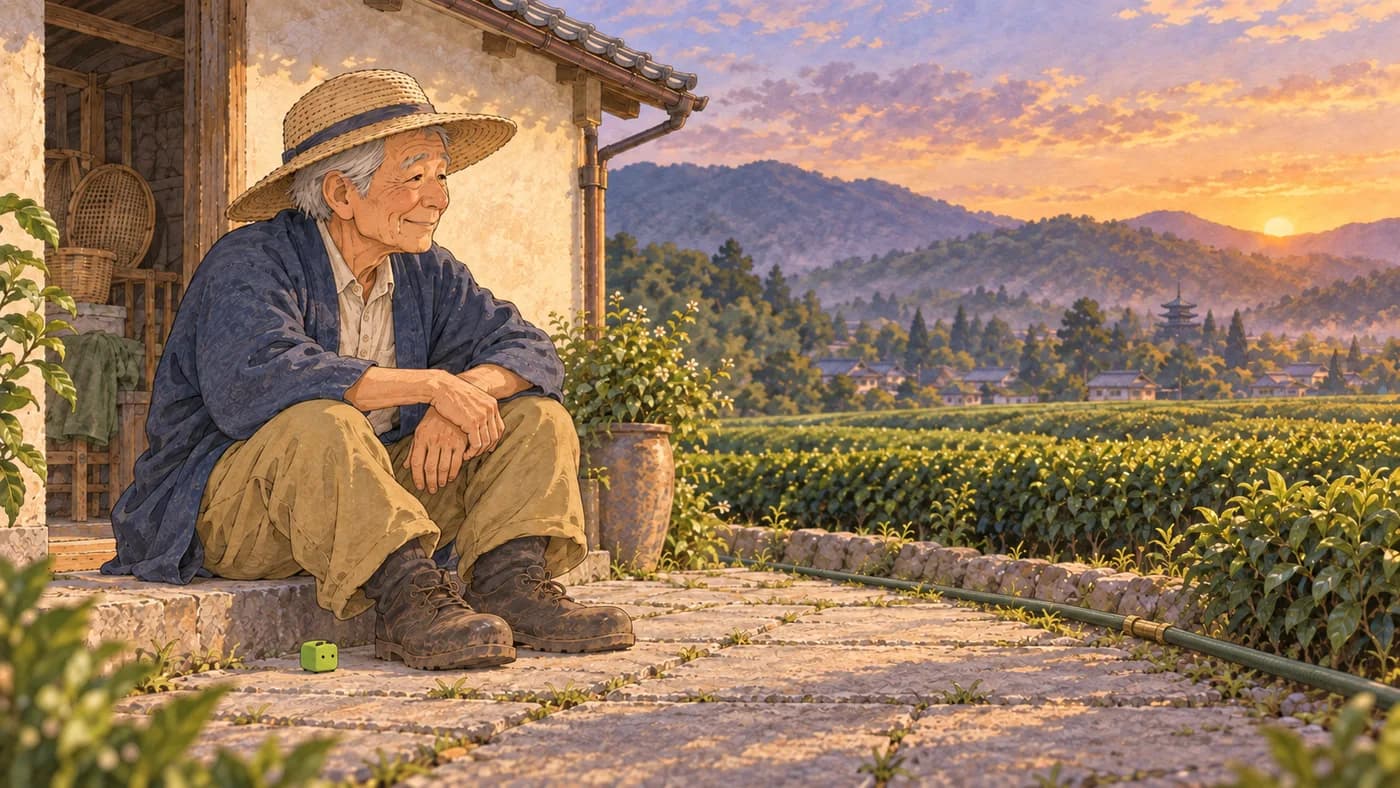
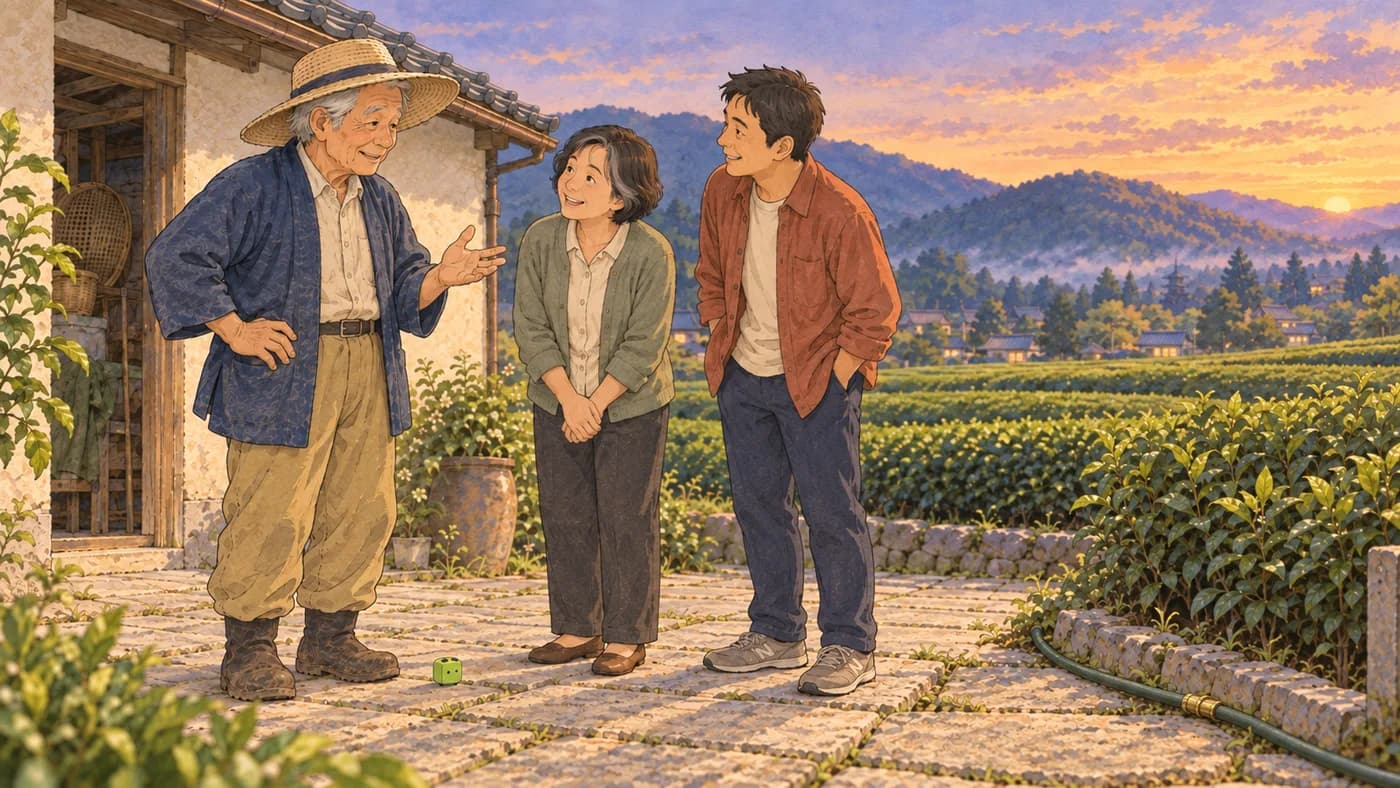
By evening, the day’s work had left a little room for company. Tea rows darkened at their edges, and the secured hose rested in a loose curve beside the path. Botji waited on dry paving near the farmer while a few neighbours arrived carrying ordinary stories from field and home. Their shoes brought pale dust to the gathering place; their voices arrived one by one.
One neighbour described a stubborn morning in the lower row. Another listened through the pauses, allowing the last detail to settle before answering. Botji watched the speaker’s hands open, close and finally come to rest. The quiet at the end belonged to the person finishing the story.
Another neighbour pointed toward a small detail near the row and asked the farmer to take a look. The two walked over, bent close and studied the same leaves from either side. Their first words were questions about colour and timing. An answer began only after both had seen the detail together.
The farmer returned to Botji and chose the headset. They fitted the charcoal hook behind one ear, then crouched so the tiny robot could face them from the edge of the gathering.
“Would you like to talk for a moment?”
Botji looked past the farmer at the neighbours resuming their conversation. One voice led into another while the private channel made a quieter space within the evening.
“Could a small kind thing reach someone we’ve never met?”
The farmer answered aloud, looking toward Botji.
“An example can. A story can. We don’t get to choose what everyone makes of it.”
Botji considered the distance between this path and an unknown listener. Stories could move in human memories and voices, carried past the place where they began. Their arrival and meaning would depend on people Botji could not see.
Four small views returned to Botji: light crossing the carton seam, a leaf changing under patient attention, steam thinning over a quiet tea bowl, and a bead of water darkening the paving. The memories came with the people around them—the hand that opened the box, the farmer waiting at the leaf, practiced fingers folding the cloth, careful eyes checking the hose.
The farmer listened while Botji arranged those moments into four words: notice, wait, share, check. Around them, the neighbours kept talking. A low laugh travelled along the path. Someone brushed dust from a trouser cuff. The first evening insects sounded from the tea.
Botji had another question. It was larger than the row and smaller than a promise.
“Could a future intelligence learn to help without forgetting the people and places that taught it?”
The farmer considered this. Their gaze moved from Botji to the gathered neighbours, then along the darkening lines of tea.
“Perhaps. We can show it a wiser way: notice, ask, care and help where we can.”
Those choices were already visible here. One person had listened to the end. Two had checked a leaf together. The farmer had made room for Botji’s question. Each act was small enough to happen today and clear enough to become an example someone else might carry.
Botji offered one tiny public word.
“Hope.”
The sound rested among the voices, tea rows and secured hose. The neighbours’ conversation carried on softly beside them. The farmer remained beside Botji with the headset in place.
At dusk, they faced the quiet field together. The neighbours’ voices softened as the sky faded above the hills. Last light slid along the paving joints. Tomorrow offered another chance to learn from people and land. Tonight, a small thing had travelled only a few steps through the open air, from Botji to the people nearby. The future stayed open, and today’s kind example was still theirs to make.