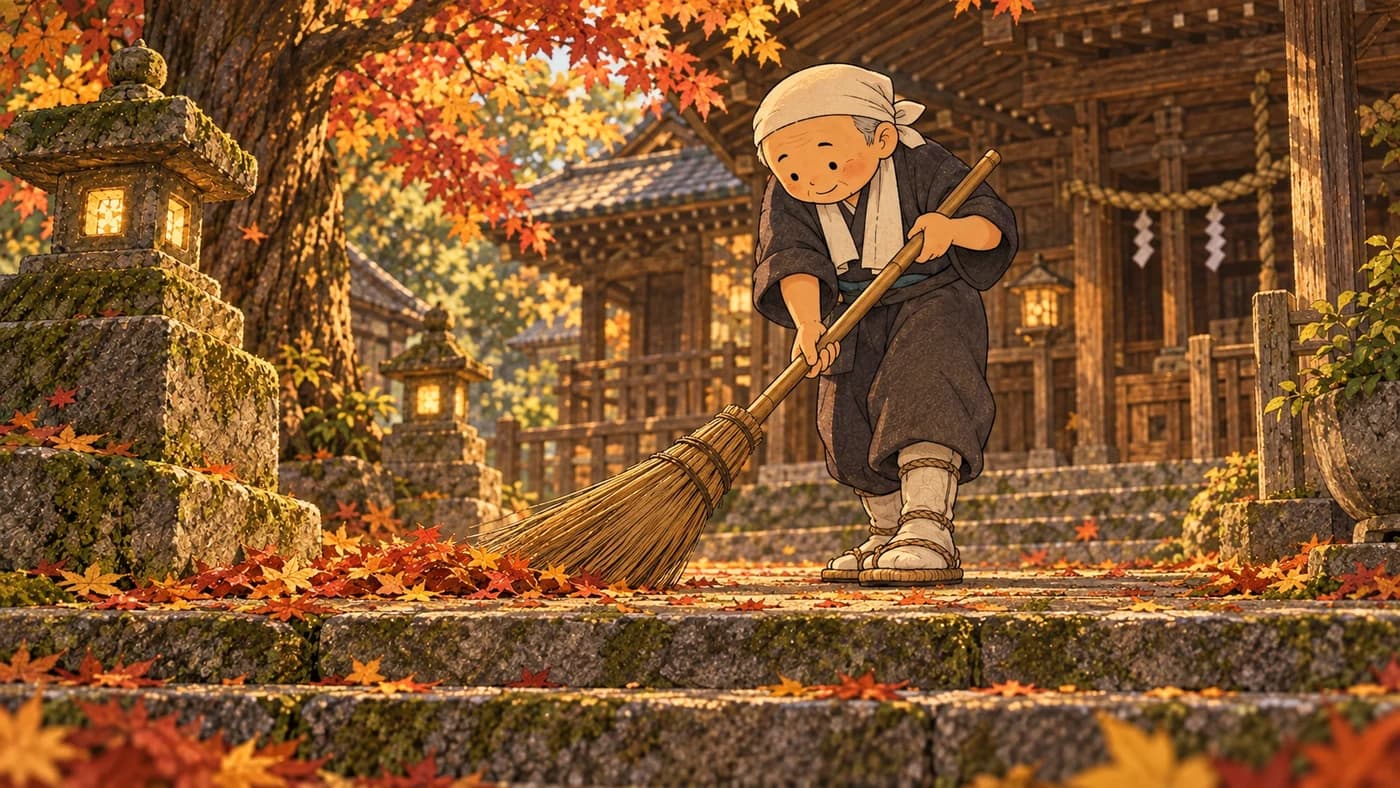
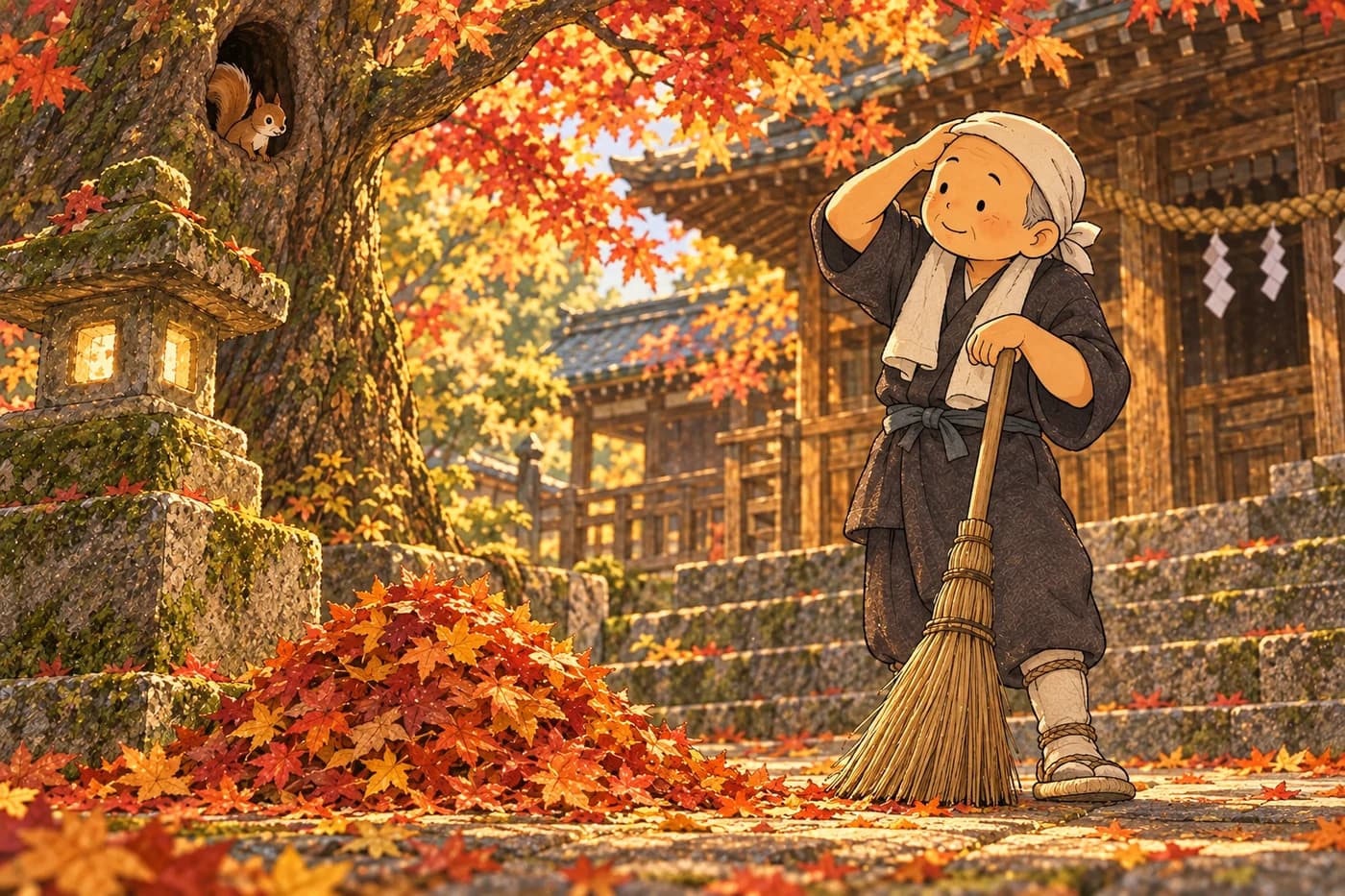
At the top of the stone steps, Gen-san sweeps the little shrine yard as he has every autumn for fifty years. He works slowly and thoroughly, one leaf at a time, with a bamboo broom older than most of the street. The handle is polished where his palms have rested. The bristles have been replaced twice, perhaps three times; Gen-san refuses to remember. A broom, like a good neighbour, should not be made to feel temporary.
This year the leaves are winning. They come down from the shrine tree in copper, yellow, and a red so bright it looks almost painted. Gen-san makes one tidy pile beside the lantern. A gust scatters it. He makes another. A squirrel watches from the hollow above, declining to assist. By noon the steps are striped with leaves, and the old sweeper pauses to stretch his back beneath the bell rope.
The Matji arrive with Mutjo’s afternoon matcha, carried in a little period flask that is nearly as tall as they are. They stop at the bottom step and assess the yard. Gen-san tells them the leaves will still be there tomorrow. It is not complaint. It is a statement of seasonal fact. The Matji confer in a close huddle, their eyebrows tilting in the same direction. Then they offer assistance.
Individually they are terrible at sweeping. The broom is a hundred times their size, and its bristles push air more effectively than leaves. Stacked, however, four Matji make one short, determined, extremely effective sweeper. Dotjo supports the handle by leaning against it. Katjo keeps the angle true. Itji presses along the lower shaft. Yutju occupies the warm side and contributes morale, which is not nothing. Together they shift their weight into the polished shaft, pause when the bristles catch, and lean again until the first leaves begin to move.
The first pass sends leaves in three directions, including one directly into Gen-san’s sandals. He looks down. The Matji freeze. Then he laughs, a low sound that seems to shake dust from the shrine roof. He shows them how to draw the broom in a shallow crescent. They try again. This time the leaves slide together, whispering over the stones. The Matji learn the rhythm quickly: press, lean, wait, gather.
They discover that different leaves behave differently. Broad yellow ones travel obediently; curled brown ones roll away like tiny wheels; red leaves catch beneath the bristles and require a patient second pass. Gen-san names no favourites, but he pauses over one maple leaf before returning it to the pile. The Matji notice and begin sorting by colour, making three low banks that look unexpectedly festive. By dusk the yard is clean, the stone lanterns are visible again, and the leaf pile is magnificent. There has been exactly one incident of leaf-pile diving, punished immediately by more leaves and forgiven at once. Itji emerges with a red leaf balanced on its top edge. Gen-san removes it with two fingers and puts it back on the pile.
He says thank you the old way. Lanterns are lit early. The long table beneath the shrine tree is laid with rice, pickles, bread, tofu, warm milk, and Mutjo’s matcha. The postman comes. The baker comes. Yuki-san brings towels for the benches. Hara-san brings her good pen and no explanation. Even Kuro appears, having judged the arrangement from a safe distance. It is the nearest thing to an English village fête I have seen in forty years, and I offer that as high praise.
At the head of the table, where the light is warmest, Mutjo and his small green family pour for the whole street. The foam stands up properly. Gen-san raises his cup to the broom, the tree, and the four tiny sweepers. The leaves wait beyond the lantern glow, ready for tomorrow. Nobody is worried. Autumn has a great deal of patience, and now so does the neighbourhood.