The shop opens at seven, though Mutjo opens it earlier, which means that for nearly an hour each morning the little café keeps company with itself. I have always admired this sort of punctuality. In England, where I spent several agreeable years among villages that took their clocks personally, a shop like this would be called dependable. Here we simply say Mutjo is already there.
He is twenty-four, going on twenty-five, and tired in the patient way of a person who has made peace with being tired. His hair is tied in a small bun. His cream apron has been washed so often that it has acquired the softness of an old letter. He unlocks the wooden door, lifts the hanging lamp, and looks over the four empty seats as though expecting them to have formed an opinion overnight. They have not. The seats are loyal that way.
He checks the room in the same order every day: counter, window, shelf, kettle. Nothing has moved. The paper lantern outside is angled towards the lane, as though listening for footsteps. Mutjo straightens it, wipes the counter once, then again at the corner where the light falls. It is not fussiness. It is a conversation with the morning, conducted in small, repeatable gestures.
There is work to do. He warms a ceramic bowl, sifts the green powder through a little sieve, and lets it fall in a fine, even veil. His hands are careful without being precious. The kettle waits. The bamboo whisk waits more seriously. When he draws it through the water, the room fills with a faint dry whisper, then the foam rises: fine, glossy, and quiet. It is a beautiful thing to make when nobody is watching.
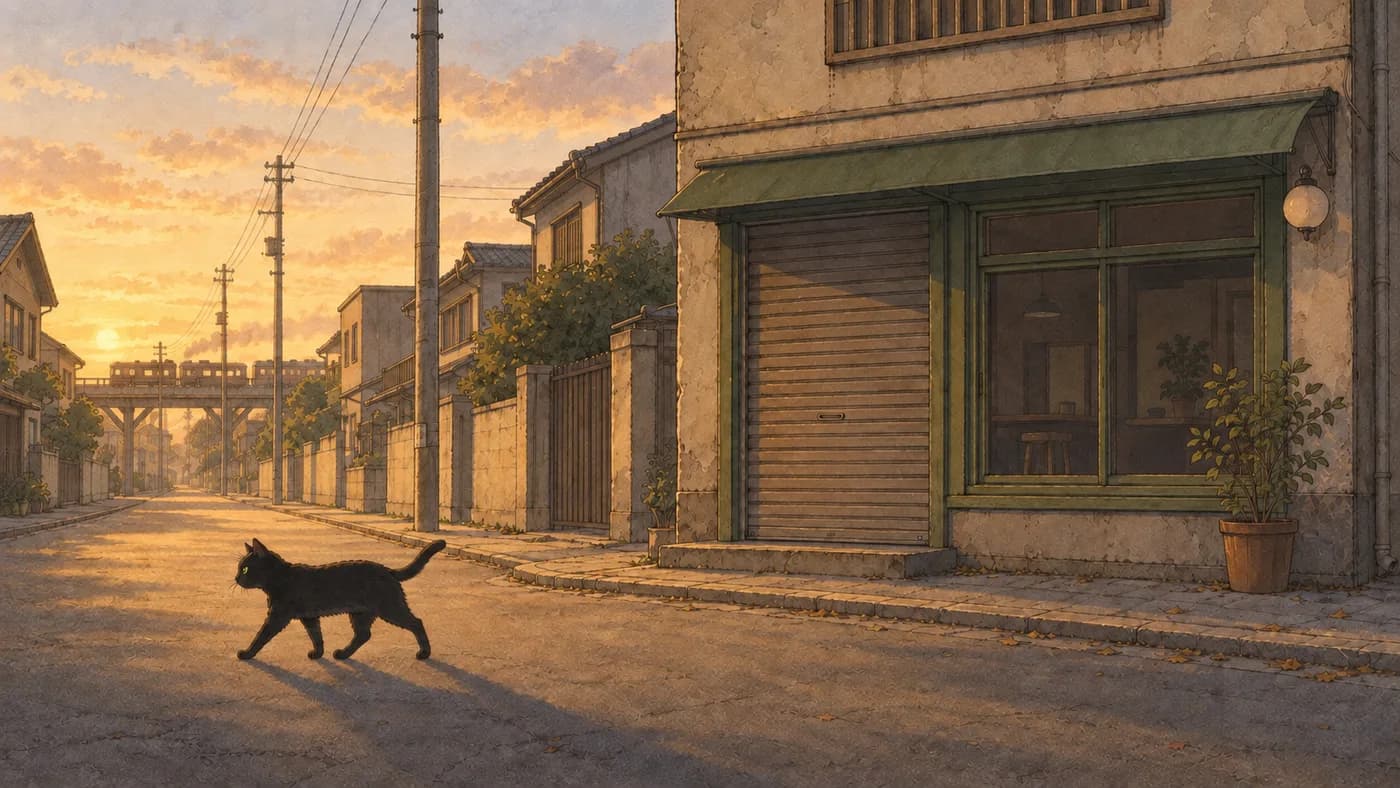
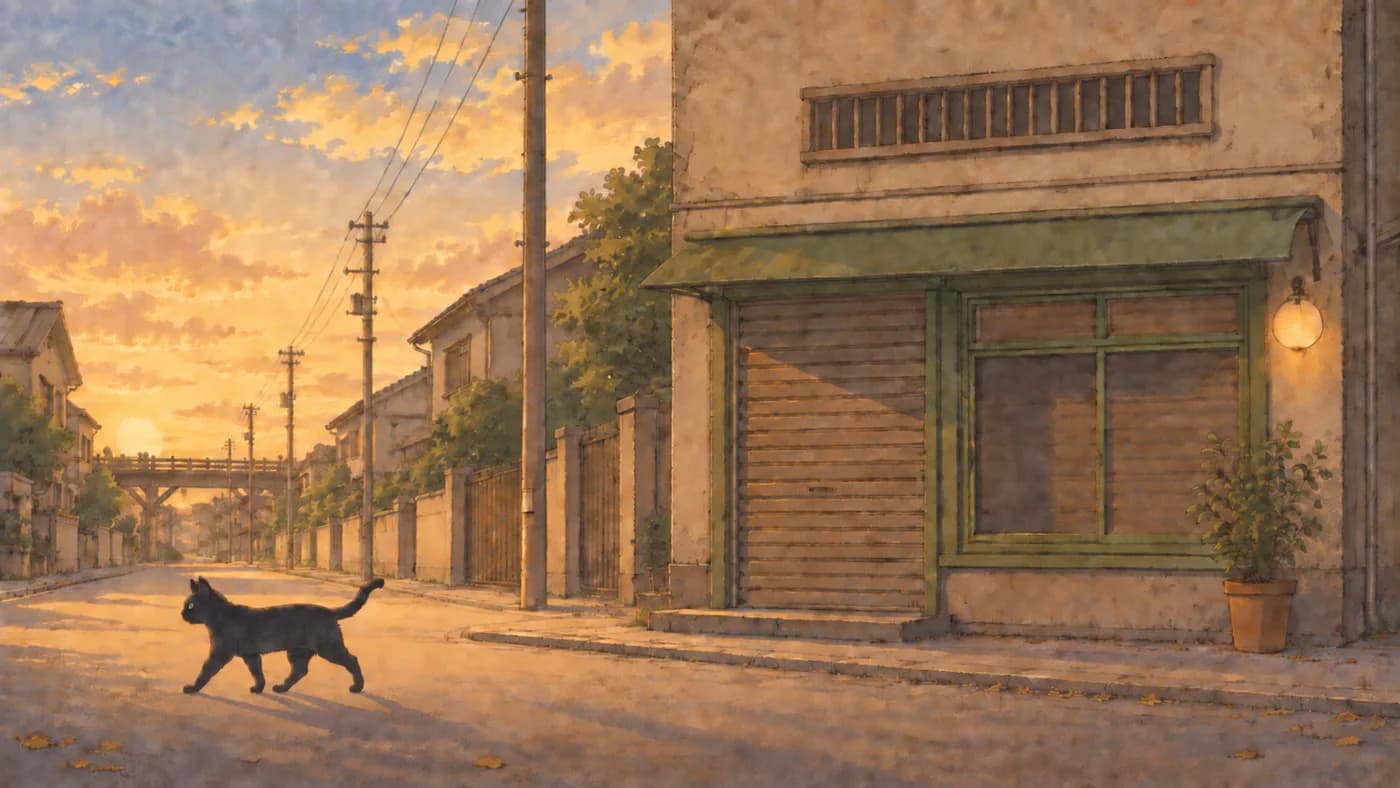
Sometimes, during the first cup, Mutjo sits beside the sunny window and drinks what he has prepared for a customer who has not arrived. He reads nothing. He merely looks at the street, where a bicycle passes, a cat crosses, and the distant train makes the glass tremble almost politely. A shop can be very small and still contain a great deal of weather.
At the back is a room scarcely larger than a cupboard. Old paper notebooks lean on wooden drawers. A few modest hand tools rest where he left them, beside a small glass jar holding a mysterious green dust. The jar gives off the faintest glow, not enough to brighten anything, only enough to make the darkness seem to be considering an answer. Mutjo hovers his hand above it and stops. He never touches the jar in the morning. Morning is for tea and sensible decisions.
By evening the bowl is washed, the whisk hangs to dry, and the lamp is lowered. Mutjo locks the door and bows to the quiet shop before turning away. It is a small courtesy, but he has always understood that places remember how they are treated. He says tomorrow will be the same as today.
He does not resent the empty seats. They are part of the arrangement, like the pause before a bell. A customer might come later, or not. The first bowl still deserves the same attention. Mutjo hangs the whisk where the morning light can find it.
He has a habit of giving things names he never says aloud. The left stool is dependable. The window is inquisitive. The kettle is argumentative when the water is late. He would deny all of this if asked, but no one asks. The street has learned to leave a person’s private arrangements intact.
When rain begins, he draws the wooden shutter halfway and continues working in the changed light. The café smells of wet timber and tea. Mutjo dries the bowl, checks the latch, and glances once towards the back room. The jar is quiet. For the moment, that is enough.
He is mistaken. The street does not know this yet. Neither does Mutjo. Behind the dark window, the jar keeps its little secret, and the quietest shop in Tokyo waits with the composure of a gentleman who has been invited somewhere surprising.