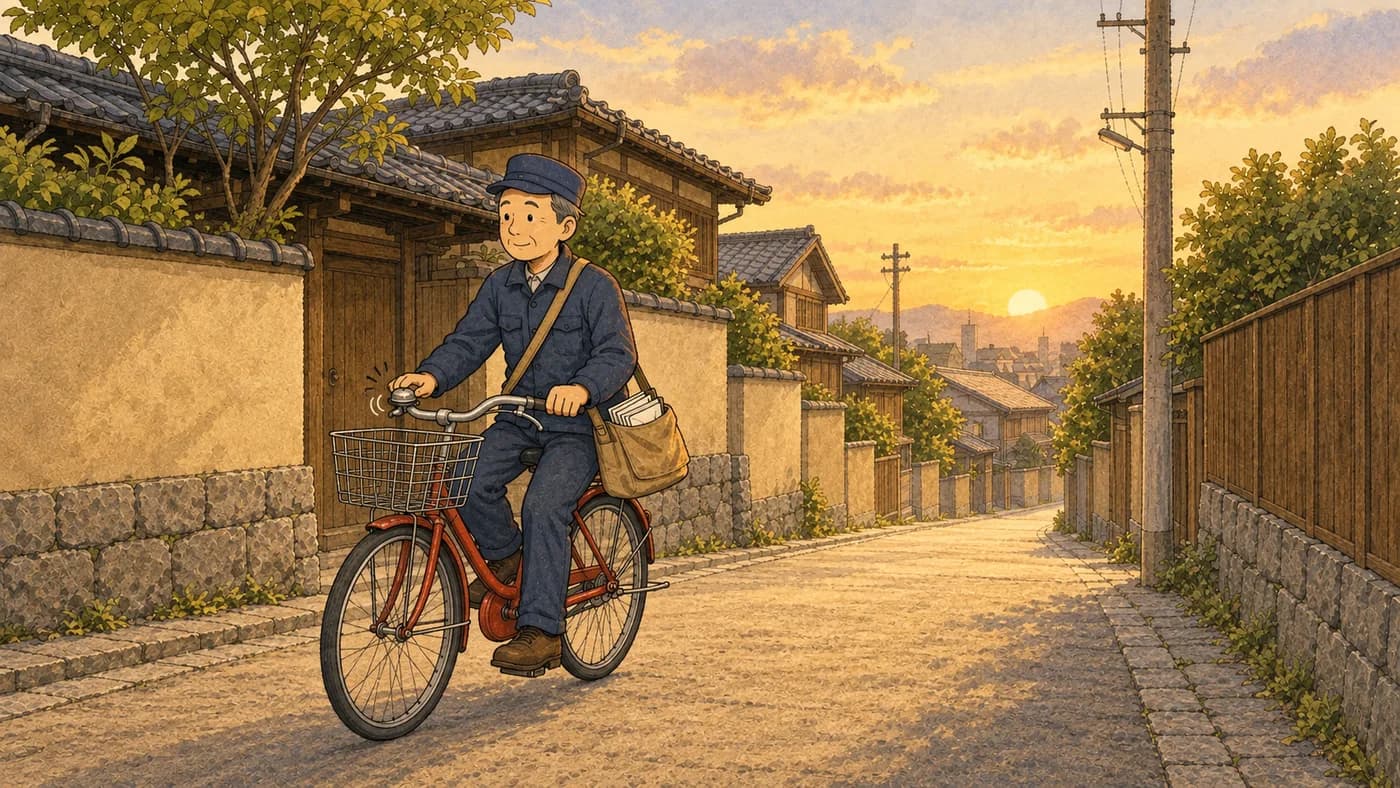
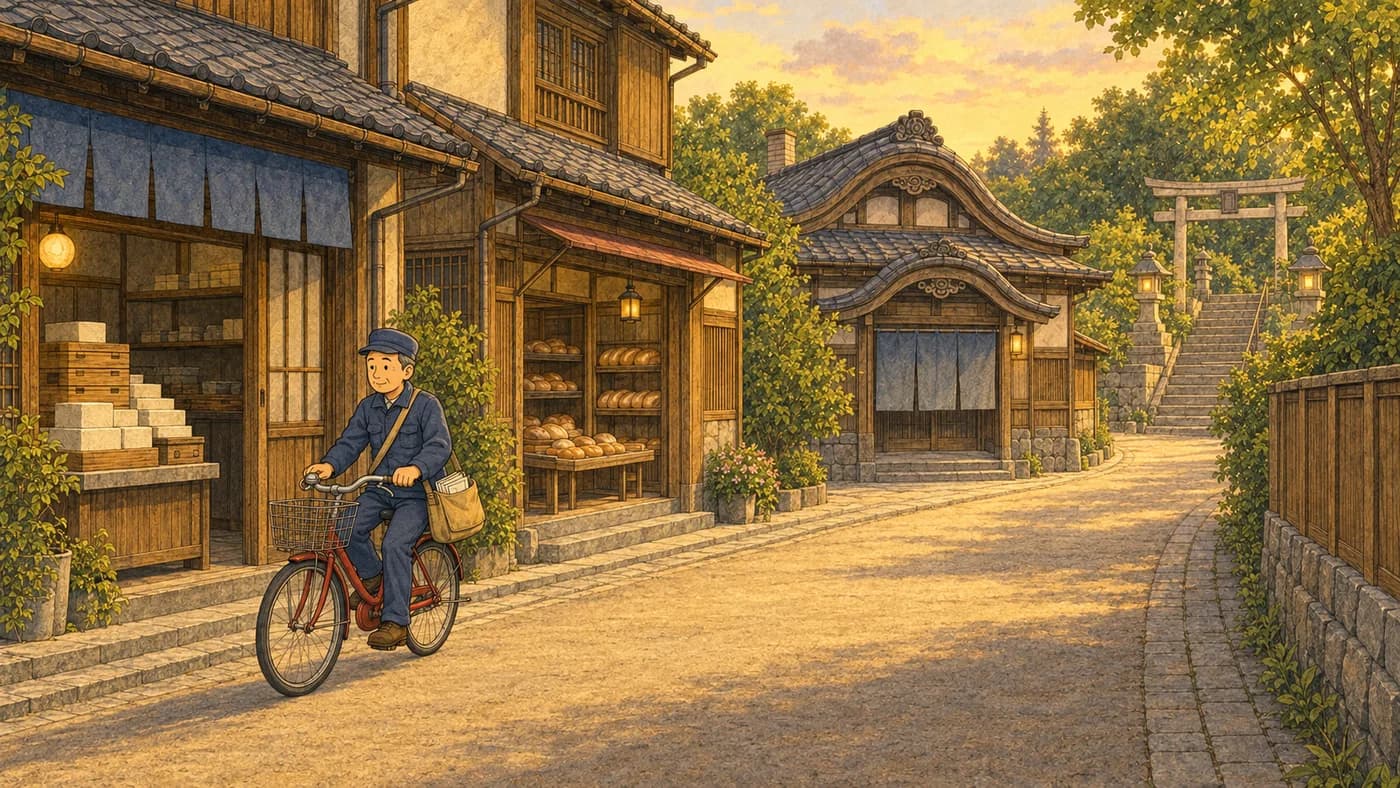
Sato-san has delivered our letters for thirty-one years, on the same red bicycle and in the same unhurried order: the tofu shop, the bakery, the bathhouse, the shrine, and the little matcha café last, because by then the tea is ready. The English village of my youth had a postman of exactly this kind, red van and all. I have believed ever since that a street is only as calm as its postman.
This morning the mailbag is heavier than usual.
Sato-san notices at the first corner. Nothing on his list explains the weight, but the bag shifts when the bicycle stops. He opens the flap. Four Matji look up from among the parcels with expressions suggesting that the postal system has requested their supervision.
Sato-san considers the matter. He closes the flap loosely enough for four green faces to see the road and continues to the tofu shop.
Every letter receives an inspection. A plain envelope is tilted towards the morning light. A paper-wrapped parcel is examined along its string. One Matji settles squarely on a box marked FRAGILE, apparently in an official capacity. Sato-san waits until the inspection is complete before lifting it.
Kobayashi-san accepts his post with the brief nod of a man who has been awake since four. His eyes move to the bag. The Matji become still. Kobayashi-san looks at Sato-san, who offers the mild expression of a public servant encountering nothing outside procedure. The tofu maker takes his letter and goes inside.
At the bakery, Ume-san opens the door with flour on one cheek. A bread coupon lies near the top of the bag. The four Matji arrange themselves beside it and bow together, their bodies dipping in a neat green rhythm.
Ume-san becomes speechless. This is unusual in a woman who can discuss flour for forty minutes without repeating herself. She bows back, a little too quickly, and takes the coupon. One Matji inspects the empty place where it had been, then signals the round may continue by facing the door.
The bathhouse receives two letters and a small parcel. At the shrine steps, Sato-san rests the bicycle while Gen-san signs for a package. The Matji sit along the basket rim, watching a cart cross the lane and a shutter rise across the street.
They begin to understand that delivery is not merely movement. It is the order in which a neighbourhood wakes. Sato-san knows which door sticks in damp weather, which customer prefers a parcel on the left step, and which dog will bark only after the bicycle has passed.
The bag grows lighter. The four supervisors settle closer together between stops. At each corner they lean with the bicycle, then straighten when the road does. Sato-san never tells them to sit properly. He has delivered too many oddly shaped parcels to distrust balance that works.
The last stop is Mutjo’s café. The brass bell gives one note as Sato-san enters. Mutjo has the usual bowl waiting beside the final letter.
Sato-san sets the nearly empty bag on the counter. Four Matji climb out and form a row beside the kettle, their route complete. Mutjo looks from them to the postman.
The last letter changes hands. Sato-san accepts his matcha standing and drinks slowly enough for the morning to catch up with him. The Matji remain very still, waiting for a verdict they have not admitted wanting.
“Good crew today,” he says.
Four small bodies brighten. Their green does not change, but pride has a way of making colour look warmer. Mutjo pours the rest of the bowl. Outside, the red bicycle waits beneath the eaves with one chalky bow mark on the basket where a Matji leaned after the bakery.
Sato-san notices the mark when he mounts. He rubs it once with his thumb, decides it is doing no harm and leaves it there.
The bicycle turns into the lane. Tomorrow Sato-san will follow the same route in the same order. At the café window, four Matji watch him go, already looking like a committee preparing its next official journey.