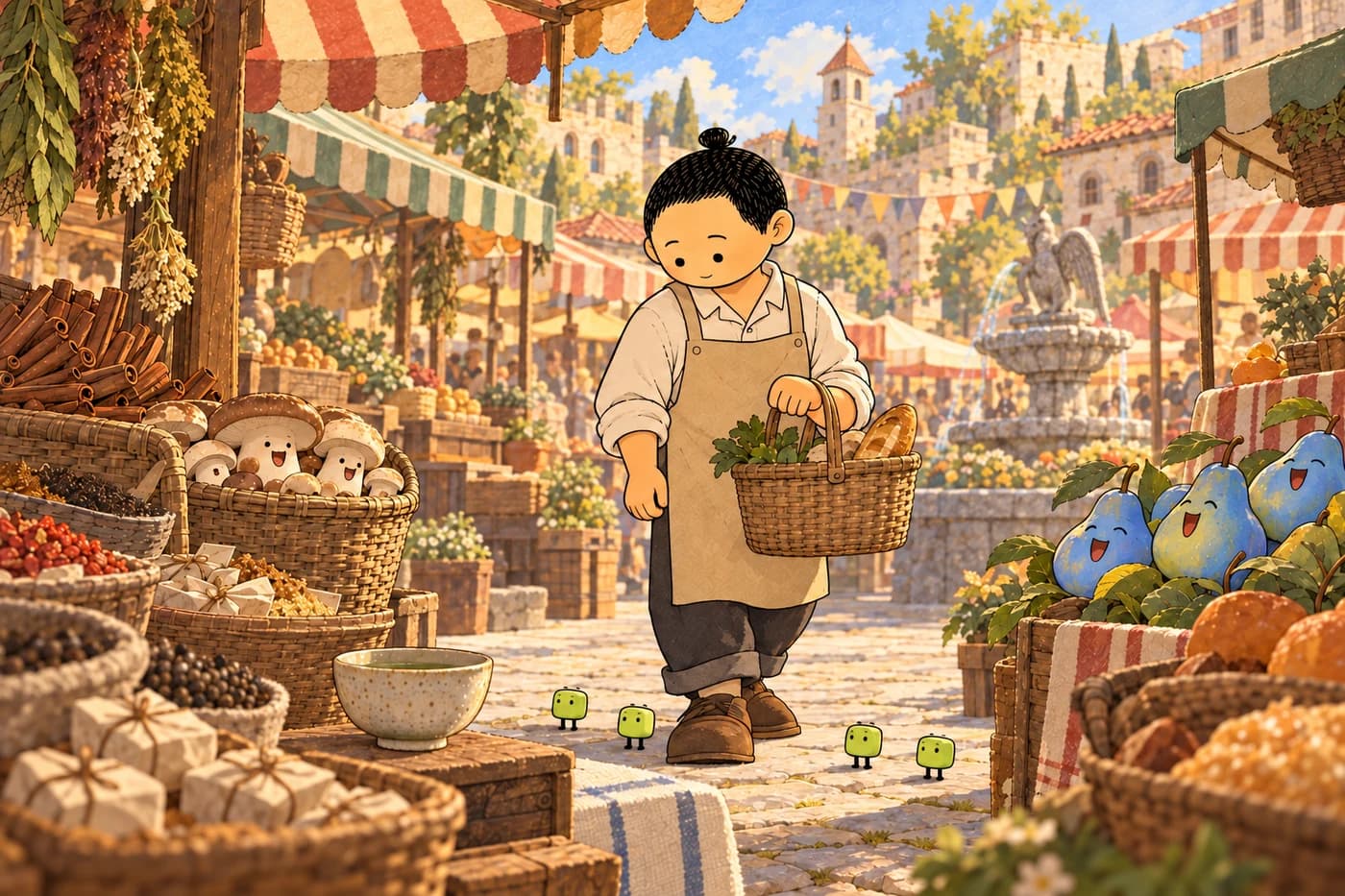
Market day here is, I will be honest, a lot. The square fills before breakfast with striped awnings, singing fruit, and a stall that sells yesterday in small paper parcels. Mushrooms gossip from a wicker basket. Honey must be talked into the jar. A woman offers three varieties of cinnamon, each with a different opinion of winter. Sir Tetsu arrives in plain clothes and is recognised anyway, mostly because nobody else makes that much noise when sitting down.
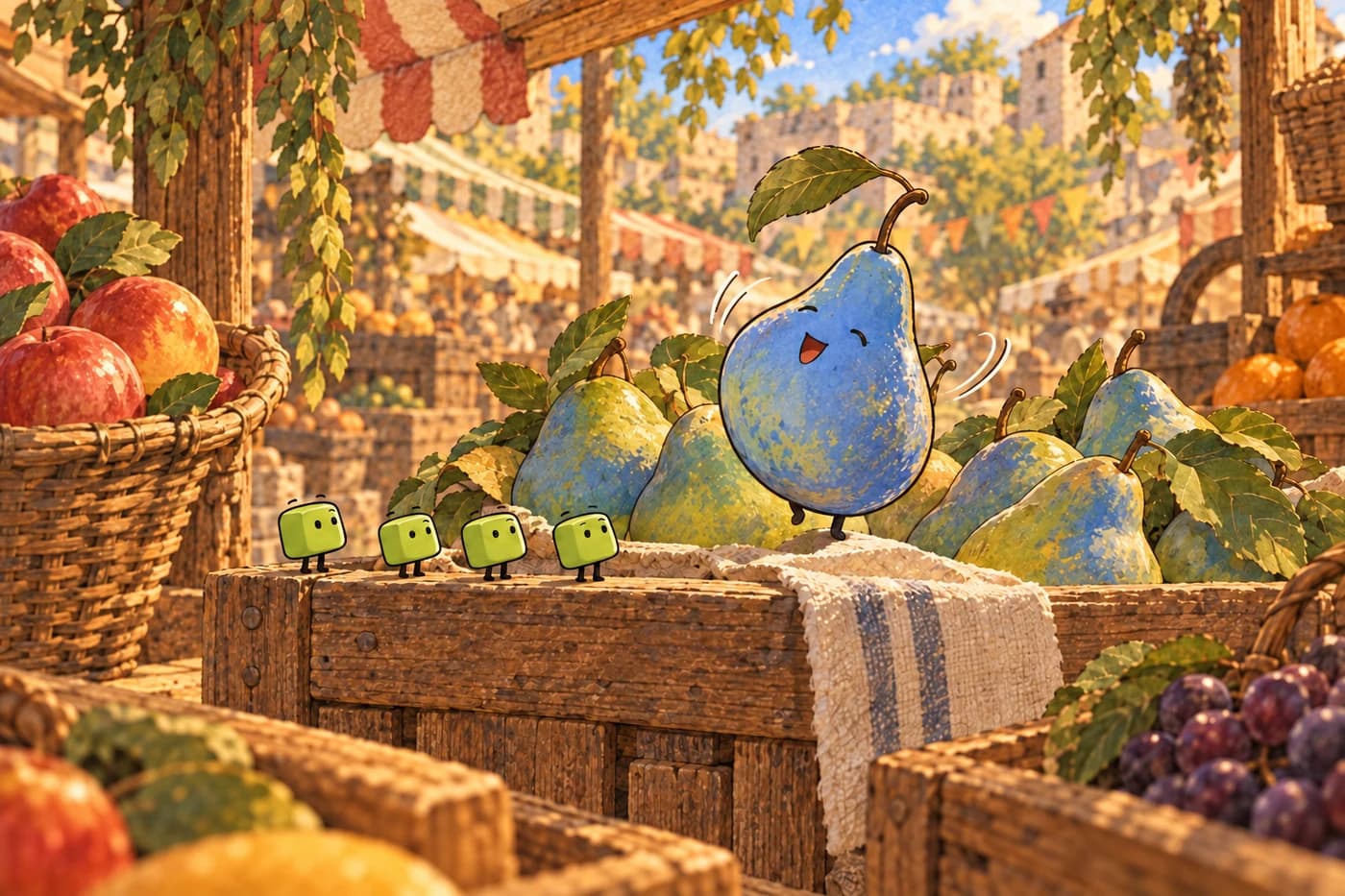
Mutjo shops carefully, the way he does everything. He carries a list folded into quarters and checks each item twice. Matcha first. Clean sugar. A little salt. Something suitable for a kettle that has survived an unexplained journey. The Matji shop enthusiastically, the way they do everything. They drift towards the singing fruit, lean close to hear the notes, and are almost sold a pear that performs a very convincing waltz.
Mutjo retrieves them from a spice pyramid. Four green cubes sit at different heights among cinnamon sticks and yellow powder, their two eyes bright with professional curiosity. The stallholder says they have improved the display. Mutjo apologises. The stallholder says no apology is required, provided the Matji continue looking interested. They do. It is the sort of negotiation the market encourages.
A juggling act passes through the square. The juggler has bright scarves, three wooden balls, and a collection of assistants who are mostly volunteers. The Matji lean towards the pattern. One is swept into the middle of the act, then another. They become props by accident and improve the rhythm by standing in exactly the right places. The crowd applauds. Mutjo waits until the juggler bows, then collects his family from beneath a spinning hoop.
The gossiping mushrooms know everyone’s business, including, somehow, the shop’s inventory problem. One mushroom says the sugar is too coarse. Another says the roof tile above the storage shelf is cracked. A third tells Sir Tetsu that he has been sleeping better since discovering tea. Sir Tetsu looks at the mushroom. The mushroom looks back. Mutjo declines to confirm or deny. The Matji gather around the basket as though attending a briefing.
They visit the honey stall. The honey refuses the jar. The vendor speaks to it in a patient, persuasive voice. The honey settles. Mutjo asks whether the honey is always difficult. The vendor says only when it believes it is being hurried. Yutju leans towards the jar in sympathy. The Matji understand this perfectly. Nothing good should be bullied into place, not honey, not foam, and certainly not a family of tiny living cubes.
By late afternoon the list is complete, except for one item nobody remembers writing down. A forest that is partial to tea-growers. The rumour comes from the mushrooms, then from the cinnamon seller, then from a child carrying a blue pear. Each version differs. All agree that the forest is old, murmuring, and worth approaching politely. Mutjo writes the rumour on the back of his shopping list.
They come home with cinnamon, three kinds of unfamiliar sugar, a little honey that has agreed to behave, and the rumour. The Matji travel in the basket, occasionally leaning over the rim to inspect the road. Sir Tetsu carries the kettle. Every few steps the basket tilts towards a new smell, and four pairs of eyes appear above its rim. Mutjo checks the cork on the honey twice. Behind them, the mushrooms continue revising the rumour for the next customer.
At the shop, Mutjo puts everything away. The mushrooms’ inventory advice is correct. The roof tile is cracked. The sugar behaves differently in hot water. The rumour remains on the list, circled twice. Outside, the new-world evening gathers around the crossroads. Inside, the Matji sit beside the kettle, already planning a polite visit to a forest that may or may not be listening.