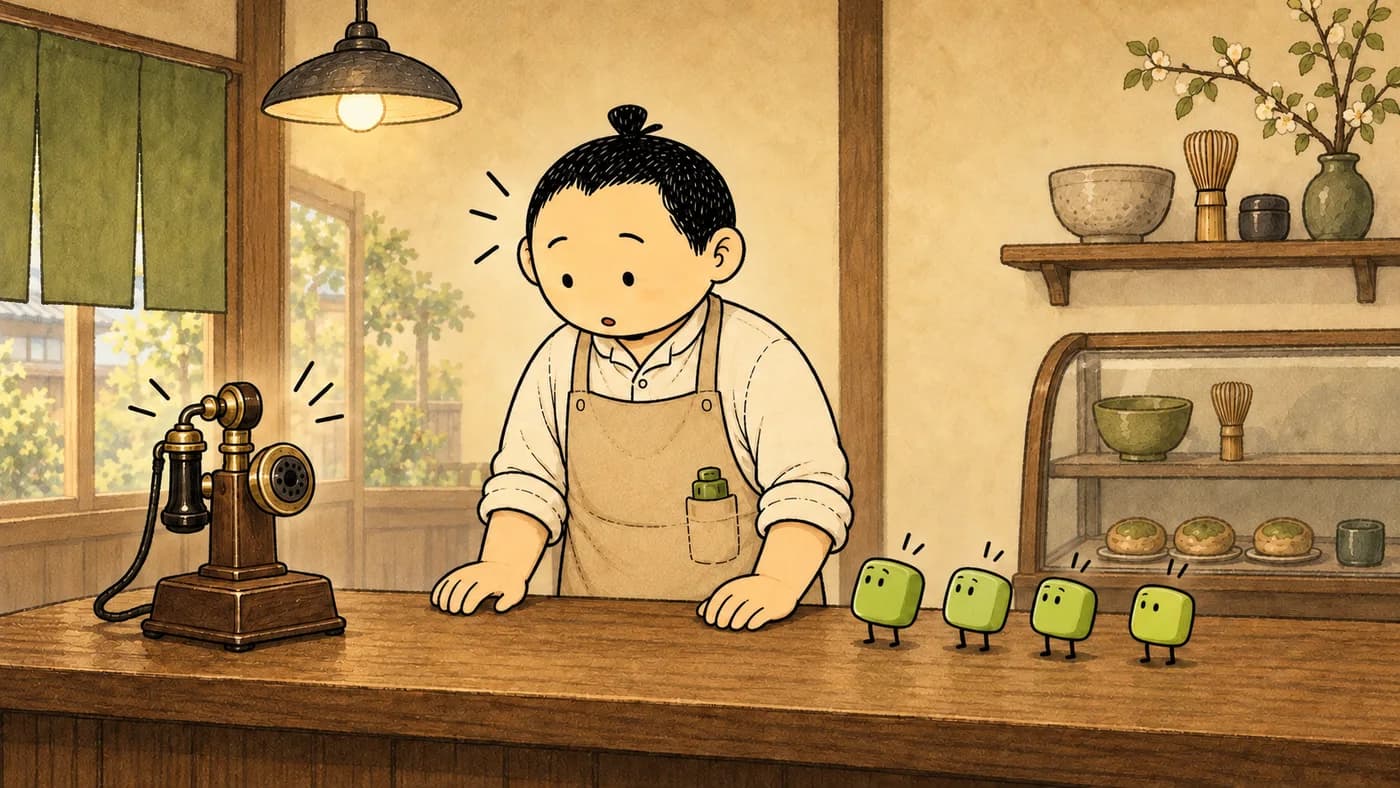
The shop’s first delivery order comes from Toda-san the bookbinder, three streets away. She would like one matcha while it is still warm. Mutjo accepts before considering the bicycle, the traffic or the four Matji now examining his delivery basket.
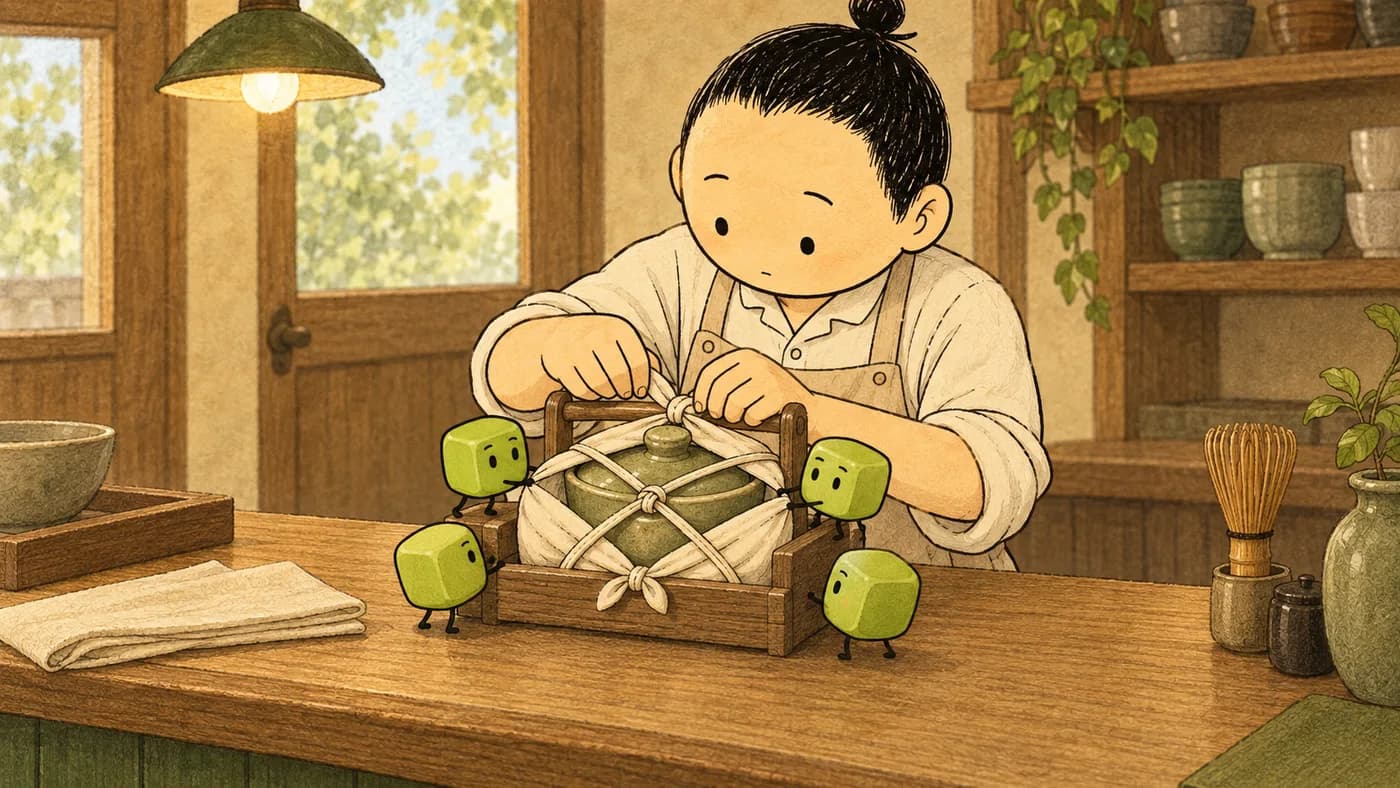
He wraps the ceramic cup in a clean cloth and settles it upright inside a wooden carrier. One Matji inspects the lid. Another studies the handle. The smallest climbs into the red basket, is lifted out, and climbs back in before Mutjo has finished explaining that this is work.
The other three join it. Democracy being what it is, the bicycle sets off with a crew of four.
They assign themselves duties without discussion. One faces the road. One watches the cup. One watches the sky for reasons known only to itself. The smallest presses against the carrier’s warm side as though it has found a private hot spring.
Mutjo pedals slowly. The tofu shop passes, then the bakery and the little police post. At every rough patch, the four bodies lean towards the carrier together. The cup remains upright. A postman rings his bicycle bell as they cross his route and receives four solemn tilts in reply.
At the first red light, pedestrians gather beside the basket. A man glances down. The Matji become statues. A woman looks twice. Nothing in the basket moves except steam escaping beneath the lid.
Then a child notices the smallest.
She raises one hand. The Matji holds its pose. The child waves again, more carefully, as though addressing a shy bird.
The smallest leans towards her, lifts one skinny leg and settles back. It is less a wave than a whole-body answer. The child beams. Before the other Matji can decide whether protocol has been breached, the signal changes.
Mutjo pedals on. The smallest keeps its face turned towards the crossing until it disappears around the corner. A greeting may be a tilt in the café; apparently a farewell can be the decision to keep looking.
The road narrows beside a row of wooden houses. One Matji watches a loose paving stone. Another presses closer to the cup as the bicycle passes it. The sky-watcher remains committed to the clouds. Mutjo begins to understand that supervision is most convincing when nobody has requested it.
Toda-san waits outside the bookbindery, where paper and paste give the doorway a clean, dry smell. Mutjo brakes beneath the little sign. Four green passengers rise behind the carrier in a line, looking as though they have travelled for work rather than adventure.
He unwraps the cup. Steam lifts in a fine thread. Toda-san tests the warmth with both hands and nods.
“Perfect.”
One Matji tilts towards her. Toda-san looks into the basket. Mutjo becomes suddenly interested in the bicycle bell. The little cube leans again, the same small movement offered to the child at the crossing.
Toda-san smiles. “And I may have imagined the waving.”
Mutjo bows. The Matji return to statue-pose, though the smallest’s eyebrows remain slightly high. Both things—the perfect temperature and the doubtful wave—are allowed to be true.
The ride home is slower. The carrier is empty, and all four Matji rest against one another while the bicycle follows the lane back towards the café. At the red light, the child is gone, but the smallest looks for her anyway.
Under the café eaves, the crew remains in the basket for a moment, facing the street they have crossed. Mutjo lifts the carrier. The Matji climb out in a quiet row and follow it inside.
The first delivery has taken twice as long as expected. The matcha arrived warm. The basket acquired supervisors. Somewhere nearby, a child is certain that a green square waved to her. For a small shop’s first journey beyond its door, this seems an entirely respectable result.