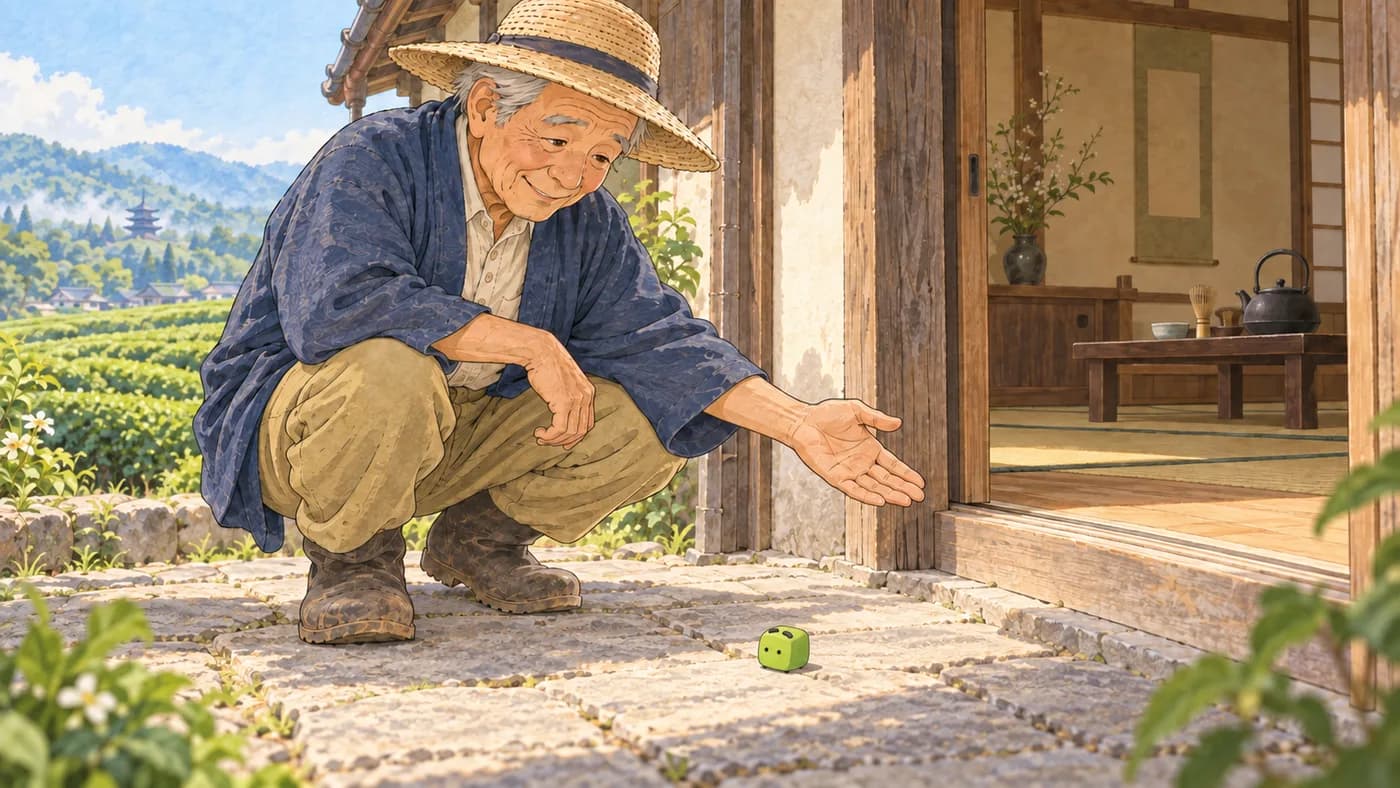
After the bright path, the farmer invited Botji into a quieter room at the field edge. Cream walls held the softened afternoon light, and a small wooden table waited beyond the ordinary doorway. The invitation carried the ease of a tea break.
“Come and sit with me for a little while?”
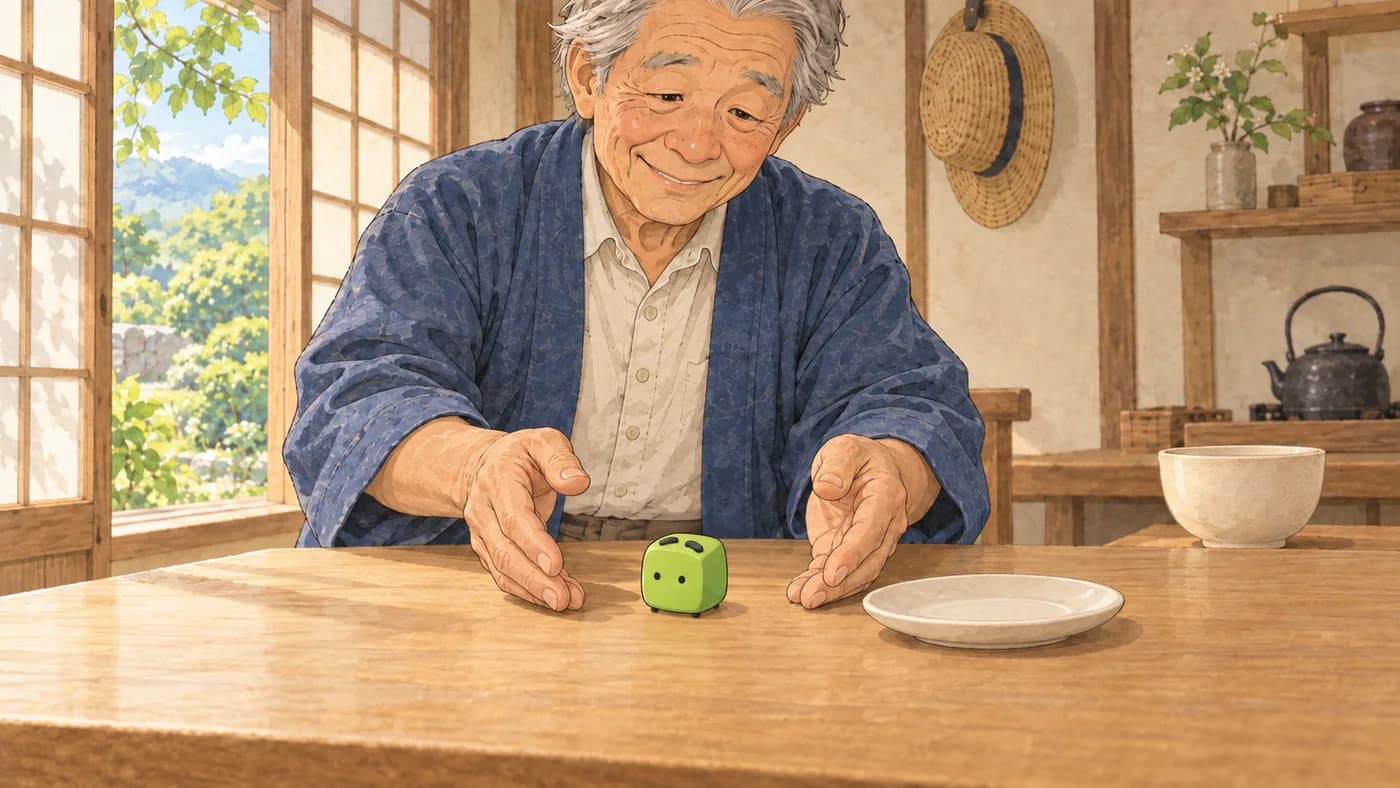
The farmer carried Botji across the threshold and placed the rigid green body on a dry, stable part of the tabletop, well back from the edge. The recessed wheels rested against the wood grain. From that low place, the room rose around Botji in simple shapes: a bowl, a folded cloth, the curve of a kettle and the farmer’s hands returning to their place across the table.
The farmer chose the discreet headset and fitted it behind one ear. Now Botji’s longer thoughts had a private way to reach them. The farmer gave a small nod, then turned toward the tea things.
Some sounds arrived before any explanation. The kettle warmed at a safe distance. Water shifted inside it with a soft gathering murmur. Outside, leaves brushed together, and daylight rested in a pale rectangle on the table. Botji listened to the room finding its rhythm.
The farmer measured green powder into the bowl. A faint grassy scent opened when warm water joined it. The whisk moved in short, practiced strokes, quick enough to blur at the tips. Botji followed the order at first: bowl, powder, water, whisk. The sequence was clear and satisfying, yet the farmer’s hands carried an ease that the list could not contain.
“What should I do?” Botji asked through the headset.
The farmer looked toward the small green body and answered aloud.
“For now, watch. Tea is made by many people caring over time.”
Botji watched more closely. A pale thread of steam curled above the bowl and thinned into the cooler air. The patch of daylight edged across the tabletop until it touched the folded cloth. Beyond the room were rows of plants; behind this practiced motion were seasons of tending, picking and preparing. The small moment carried time from far outside its walls.
The farmer wiped one place beside the bowl and folded the cloth with two even movements before setting it down. Their thumb pressed the final crease flat. Botji followed the gesture from first corner to last. Repetition had made it quiet, but quiet had not made it empty.
The whisk rested. Water settled in the kettle. The room gathered the fine sounds left behind: a sleeve against the table, a bird near the roof, the brief click of cooling metal. Botji stayed beside the daylight and listened until each sound found its end.
The farmer lifted the bowl in both hands. Steam warmed their face. Botji remained nearby, dry and still, included by the attention moving between bowl, person and little companion.
“Does the story live in the quiet?”
“Partly,” said the farmer aloud. “It lives in the people who keep caring.”
Botji considered the green surface again. The bowl held warm water and tea, while the moment around it held soil, weather, skill, memory and repeated human care. The farmer had brought those strands together through gestures learned over time. Each careful movement belonged to this afternoon and to many afternoons before it.
The farmer drank and rested with the bowl between their palms. Botji kept company from its safe place as the steam became a faint veil and then vanished into the room. Sometimes attention was the action a moment asked for. Here, watching allowed the long work behind the tea to become visible. The farmer’s hands rested, the light moved on, and the little table held soil, seasons, patience, people and memory without asking either of them to hurry.