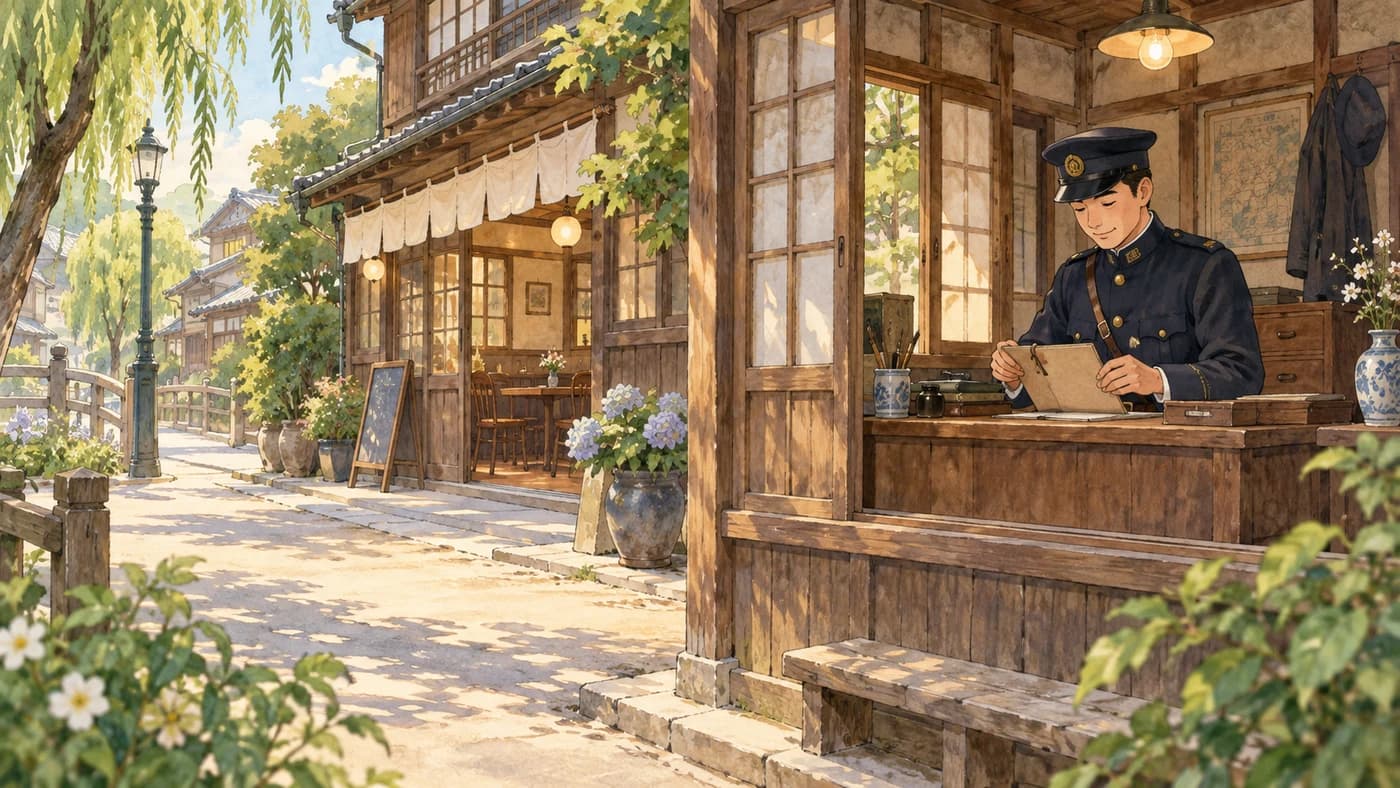
Ito-san keeps the little police post at the corner, where the most serious crime in living memory was an umbrella taken by mistake and returned that same afternoon, with a note tied to the handle. The note said, Apologies for the confusion. It was written in exceptionally neat handwriting. Ito-san still keeps it in a folder marked RESOLVED.
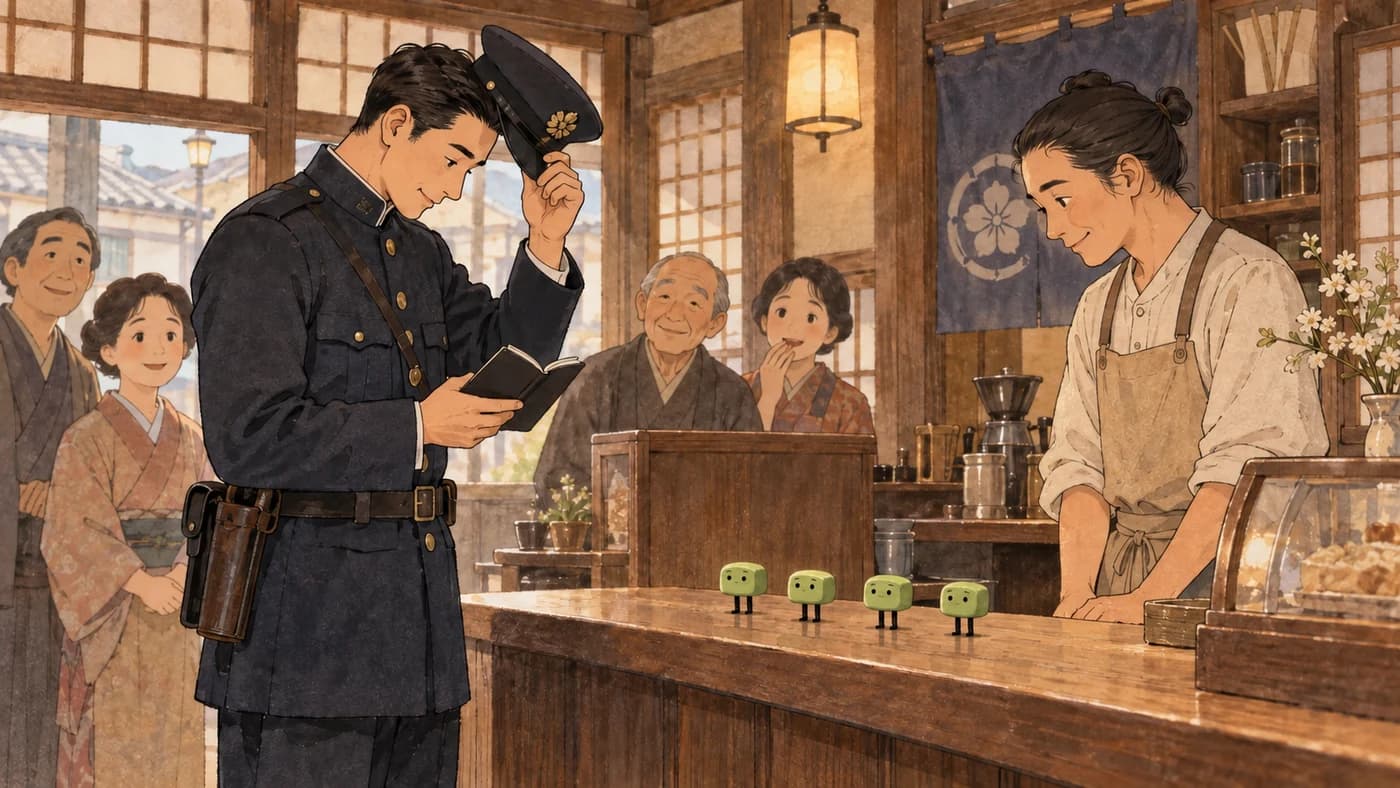
So when he calls at the café on official business, the whole street gathers by instinct. The business is this: Kuro, the neighbourhood’s large black cat, has not been seen at the police post for two days. Ito-san wishes it noted that he is not worried. He would simply like the matter investigated, preferably before lunch. He removes his cap, opens his notebook, and looks prepared to question the pavement.
The Matji take the case seriously. Katjo inspects the empty cushion beside the post. Itji studies a paw mark in the dust, then another paw mark which is clearly the first paw mark going in the opposite direction. Yutju pauses in the warmest square of sunlight and appears to consider whether this counts as evidence. Mutjo supplies four tiny cups of water. Investigations require hydration.
They proceed along the street in a solemn little line, pausing at the tofu shop, the bakery, and the bathhouse drain. Everyone has seen Kuro, or believes they have. Ume-san saw a black shape near the flour sacks. Yuki-san heard a purr behind the cedar screen. Hara-san saw nothing at all, which she reports with the authority of someone who notices everything. Ito-san writes down every statement, then checks the times against the two paw marks. They disagree completely. Hara-san points out that both prints face the café, which the officer underlines twice.
Four minutes after the inquiry begins, Itji looks up. There, on the café’s sunniest windowsill, lies Kuro, stretched from one end to the other. His tail hangs down like a black question mark. He has been there for two days, conducting his own inspection of the premises and approving them. The cat opens one eye, finds six witnesses below, and closes it again. A lesser creature might have felt embarrassed. Kuro has never been lesser.
There follows a delicate territorial matter. The windowsill is, by treaty, Matji napping ground; Kuro has occupied it by precedent; and the sunlight is moving away with the slow impertinence of afternoon. The Matji confer without sound. They climb by patient balance, one soft cube pressing against the next, and settle along the cat’s side. Kuro does not move. Yutju finds the best patch. Katjo keeps watch. Itji, having solved the case, falls asleep first.
By evening all four are tucked against Kuro’s warm flank, and the cat’s purr makes the glass hum. Ito-san drafts his report: subject located, welfare excellent, territorial dispute resolved by mutual occupation, everyone home. It is his favourite kind of case. Before closing the folder, he checks the empty cushion, the dusty lane, and the warm glass once more. Each detail now points plainly to the sill. The inquiry has taken four minutes, exactly as the café clock records.
Before he files it, Ito-san asks whether Kuro has been fed. Ume-san produces a scrap of fish, Hara-san a saucer, and Mutjo the expression of a man who has watched a minor emergency become a neighbourhood supper. Kuro accepts the fish only after everyone stops looking at him. The Matji stay tucked beside his shoulder, listening to the purr and the faint tick of the police-post clock. Mutjo brings Ito-san a fresh cup before he returns to the post. The officer bows to Kuro, to the Matji, and finally to the windowsill itself. Kuro opens one eye as if accepting a formal apology from the sun. The report goes into its folder. Outside, the street resumes its ordinary business, which is to say that everyone checks the windowsill whenever they pass.