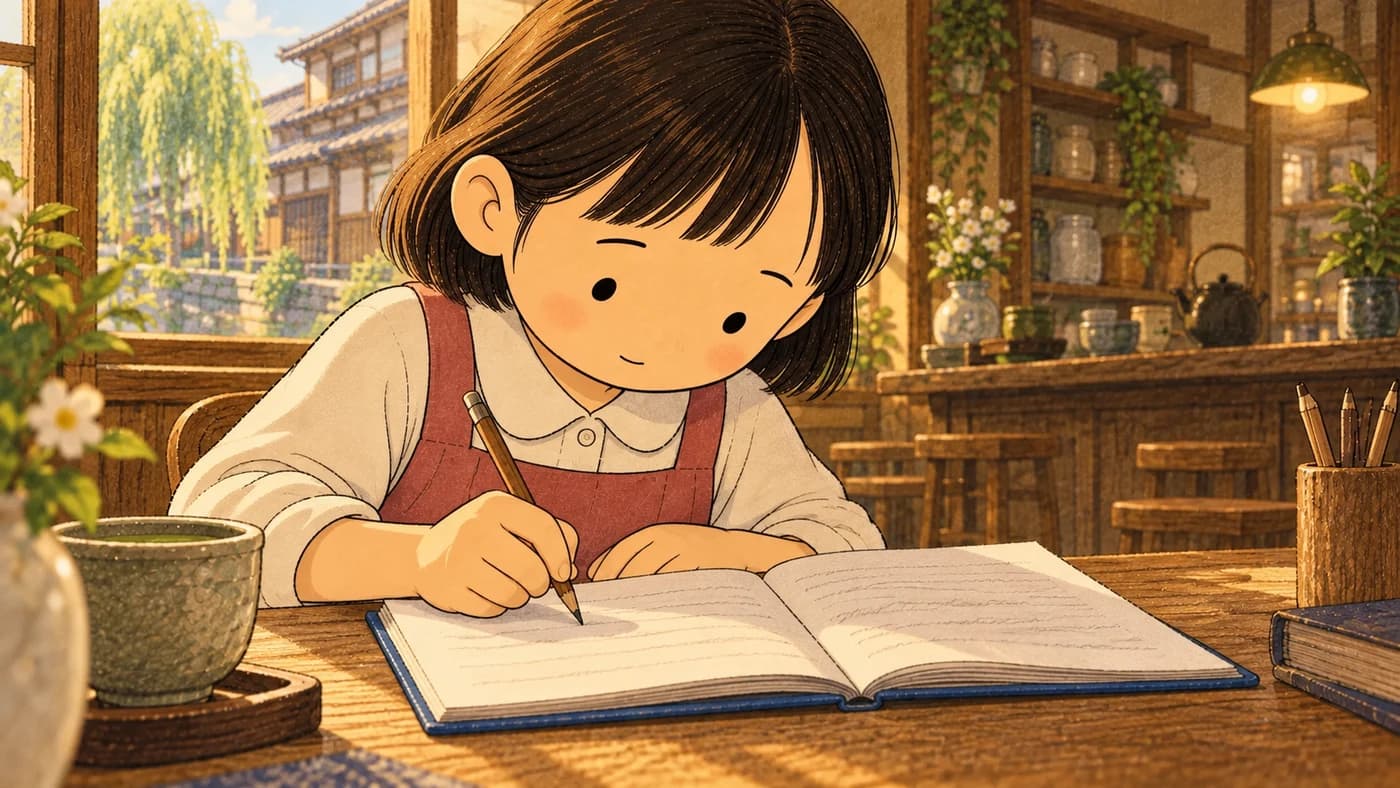
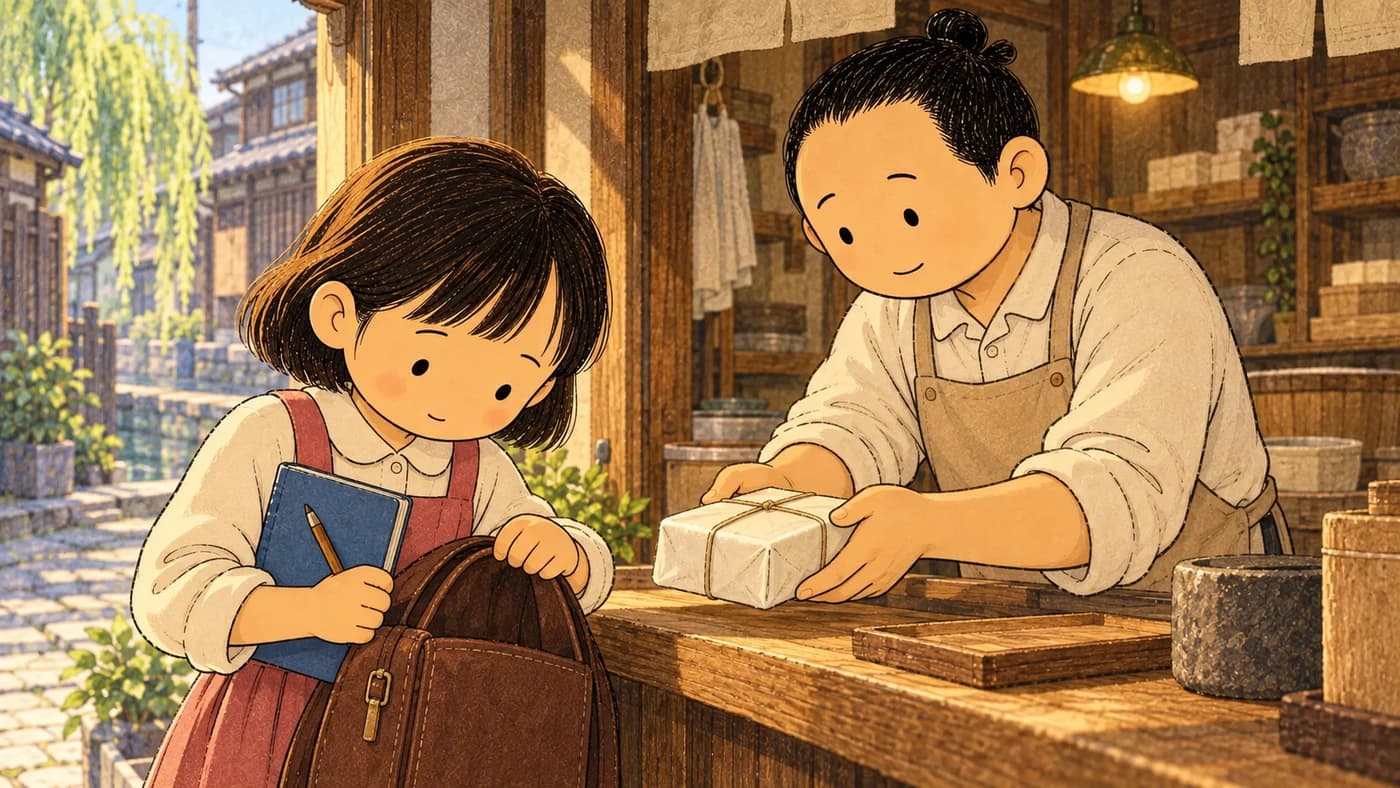
Hana-chan is eight, misses nothing, and has been given homework: Describe your neighbourhood. She takes the assignment as seriously as a census. Her notebook has a blue cover, a sharpened pencil, and three pages of questions written before breakfast. She wants names, occupations, rules, favourite foods, and the precise reason the old paper lantern outside the café leans towards the lane.
She begins with Kobayashi-san, who gives her one sentence and a free block of tofu. The sentence concerns freshness. The tofu is wrapped in paper and placed carefully into her school bag. Yuki-san gives her the bathhouse rules, including the one about wet floors and the other one she has not yet posted. Sato-san explains his bicycle route with a finger on the air, then remembers that Hana-chan is writing, not navigating.
At the police post, Ito-san provides an official statement about the umbrella. He retrieves the old note from its folder and lets Hana-chan copy the date. His expression says this is a significant historical document. It is, in the way a quiet street makes its own history: by keeping small things in good order.
At the café, the wind keeps flipping her notebook. The pages lift, slap shut, and lift again. Hana-chan sighs. Four Matji look at the offending breeze. Itji moves to one corner, Katjo to another, Yutju to the top edge, and Dotjo settles beside the spine. They become paperweights, sitting very still and very proud. Their two front eyebrows arrange themselves into an expression of professional concentration.
Hana-chan writes for an hour. She describes the smell of bread, the cedar steam at the bathhouse, the sound of the canal, and the way Mutjo warms every bowl before he uses it. She records that Kuro sleeps wherever the sun is best and that Ume-san can hear an underbaked bun from three streets away. She does not once mention that the paperweights are breathing. Some things, Hana-chan understands, are not for homework.
The Matji begin to fidget. One page has a drawing of the café window, and Itji leans over it too far. Dotjo presses close to the notebook’s edge. The pencil rolls. Katjo stops it with one careful nudge. Hana-chan looks up, sees four pairs of eyes watching her, and adds a line about neighbours who help without being asked. Nobody comments. Mutjo simply pours another cup.
She interviews the street’s quieter parts as well. A worn step tells her where umbrellas are set down. The canal gives her a list of reflections. Even the bakery bell contributes one bright note whenever Ume-san opens the door. Hana-chan writes these details in the margins, because she understands that a place is not only its official answers. It is also what happens between them. When the writing ends, the Matji line up on the notebook’s blue cover. Hana-chan closes it gently around them, leaving enough room for air and dignity, and carries the essay home. On Saturday she brings it back. Her essay is read aloud at the café, by request. Hana-chan stands on the wooden step so everyone can hear. She speaks about a street that is small and old, where people remember umbrellas, share bread, and leave okara by loose floorboards. At the end she reads: My neighbourhood is small and old and a little bit magic, and everyone in it is looking after everyone else, even the ones who pretend they aren’t.
Kobayashi-san has something in his eye. Steam from the tea, probably. He is allowed to say so. Hara-san adjusts her glasses and asks about the extra letter in neighbourhood. Hana-chan says it is her neighbourhood and she may spell it however she likes. Ito-san checks the blue notebook, considers the ruling, and closes his own. Ume-san rings the bakery bell once, which the room accepts as a vote in Hana-chan’s favour.