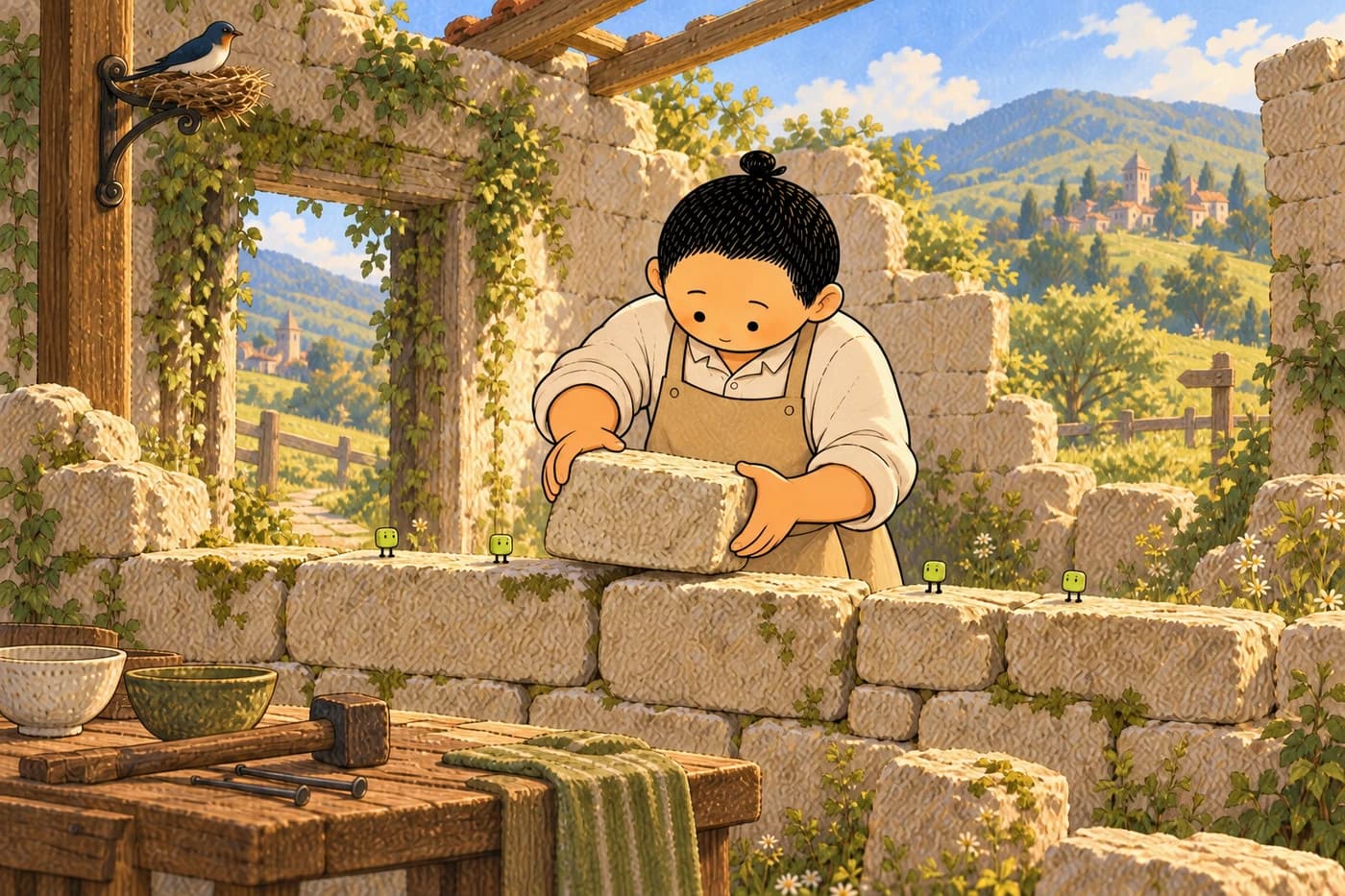
The new shop begins as a ruin at a crossroads: half a wall, no roof, excellent bones, according to the Matji, who have appointed themselves foremen. The remaining stones are pale and rough. Moss grows in the doorway. A swallow has built a nest where the sign ought to be. Sir Tetsu says the place belonged to a wheelwright. Mutjo looks at the missing roof and asks whether the wheelwright is coming back. Nobody knows.
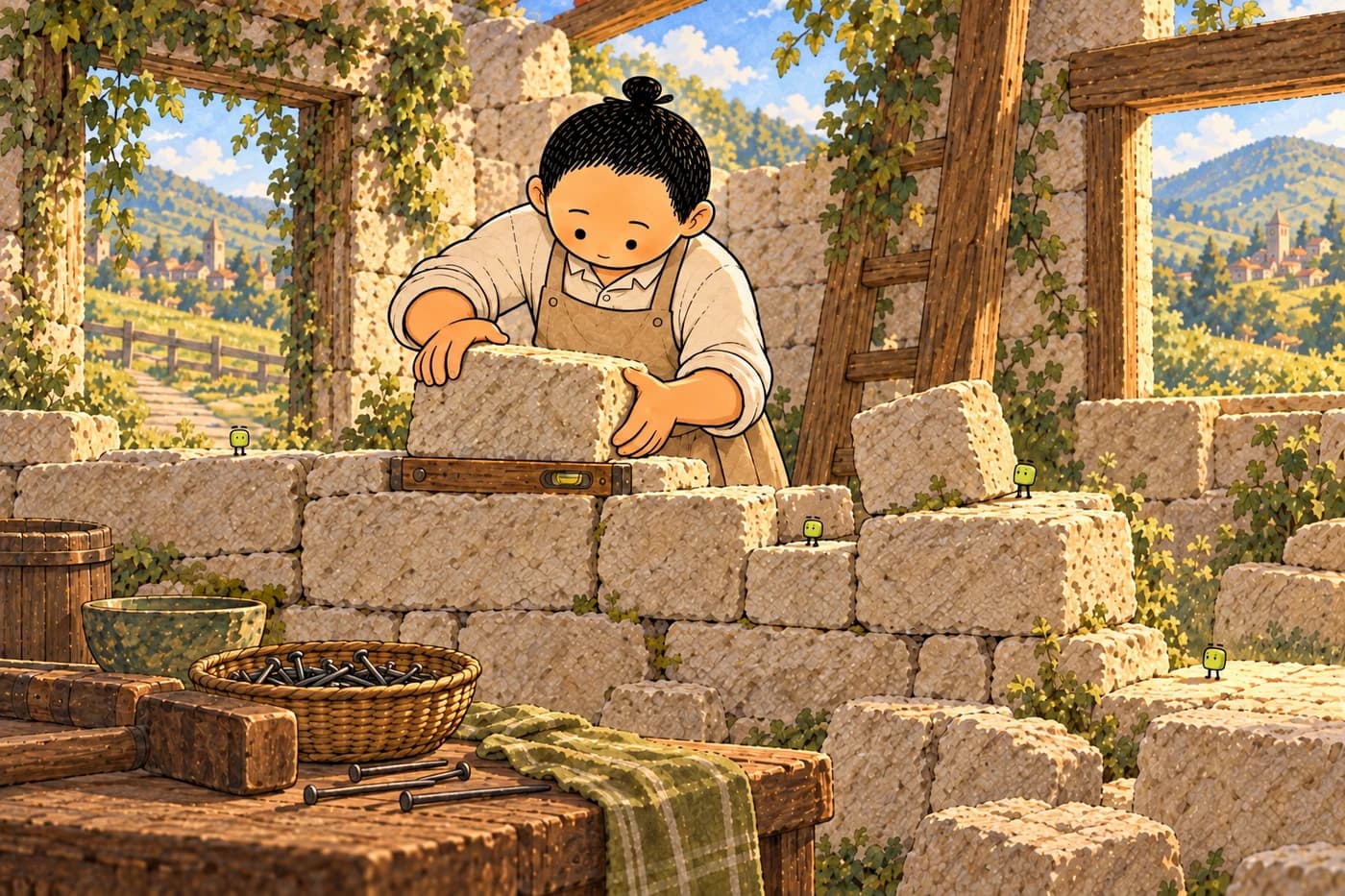
Construction proceeds by committee. Mutjo lifts the stones, one at a time, testing each for balance before setting it down. The Matji stand on the finished sections and radiate opinions about the next one. Katjo inspects the wall line. Dotjo settles into a gap to test its width. Itji leans against a loose stone and discovers that the stone is heavier than expected. Yutju finds the only warm patch and declares it a planning office.
A door is argued into a slightly different place. Sir Tetsu suggests the original opening. The wind votes against him. A window wins its case on appeal after Mutjo holds a cup inside the wall and discovers that the morning light reaches it beautifully. The Matji gather beneath the proposed window, peering through the empty square at the hills. The view is good. The decision is unanimous, which is rare enough to record.
Villagers drift by to watch the strange barista and his small green crew. The first woman brings a basket of nails. The second brings rope. A child brings a blue tile found beside the river. Nobody is certain what the shop will sell, but everyone understands that a ruin with tea in it is no longer entirely a ruin. Mutjo sets the kettle on a flat stone. The queue forms before there is a counter.
The Matji move from plank to plank, leaning into each board when the wind rises. They press close to stones while Mutjo sets mortar around the edges, then cross the floor in a line and stop wherever it flexes. Four sets of skinny black legs mark each weak place more clearly than chalk. Sir Tetsu watches their patient adjustments and begins placing stones with greater care.
At midday the villagers take a break. Mutjo pours matcha into bowls borrowed from three different homes. One bowl has a blue rim. One has a painted fish. One is so old that the glaze has softened. The Matji sit along the sill of the new window, their faces bright in the light. Sir Tetsu sits on an overturned beam and removes his gloves. The wall is still crooked. The tea is excellent.
In the England of my youth this was called a barn-raising, and it ended the same way there too: everybody fed, one wall very slightly crooked, nobody minding. By the second break, the four green foremen have claimed the sill. One leans beside the spirit level while the others watch its bubble settle. The villagers wait for Katjo’s eyebrows before adding the next beam, and the once-crooked wall improves by a fraction.
The roof goes on before the first rain. The sign goes up before the roof is fully settled. Priorities are priorities. Mutjo paints a simple bowl on the plank. Sir Tetsu hangs it, standing on a stone while the Matji brace the ladder’s feet. The swallow watches from the nest. By evening the ruin has become a shop with a door, a window, a roof, and a smell of warm tea.
The first customers enter one at a time. They touch the repaired wall. They look through the window. They sit wherever there is room. The Matji inspect the threshold as people cross it, then line up beside the kettle. Outside, the crossroads remains busy. Inside, the new shop holds its first quiet. It is not yet home. It is, unmistakably, on its way.