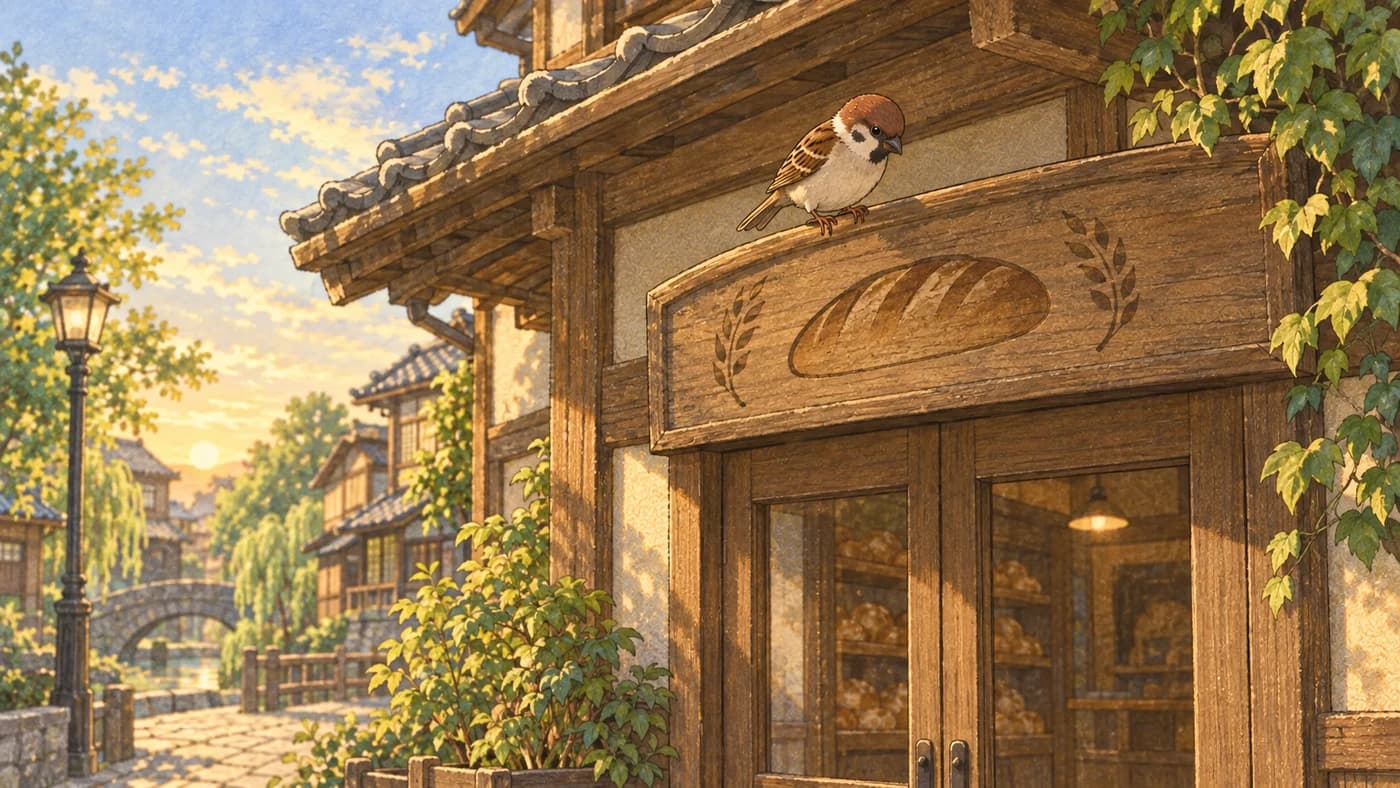
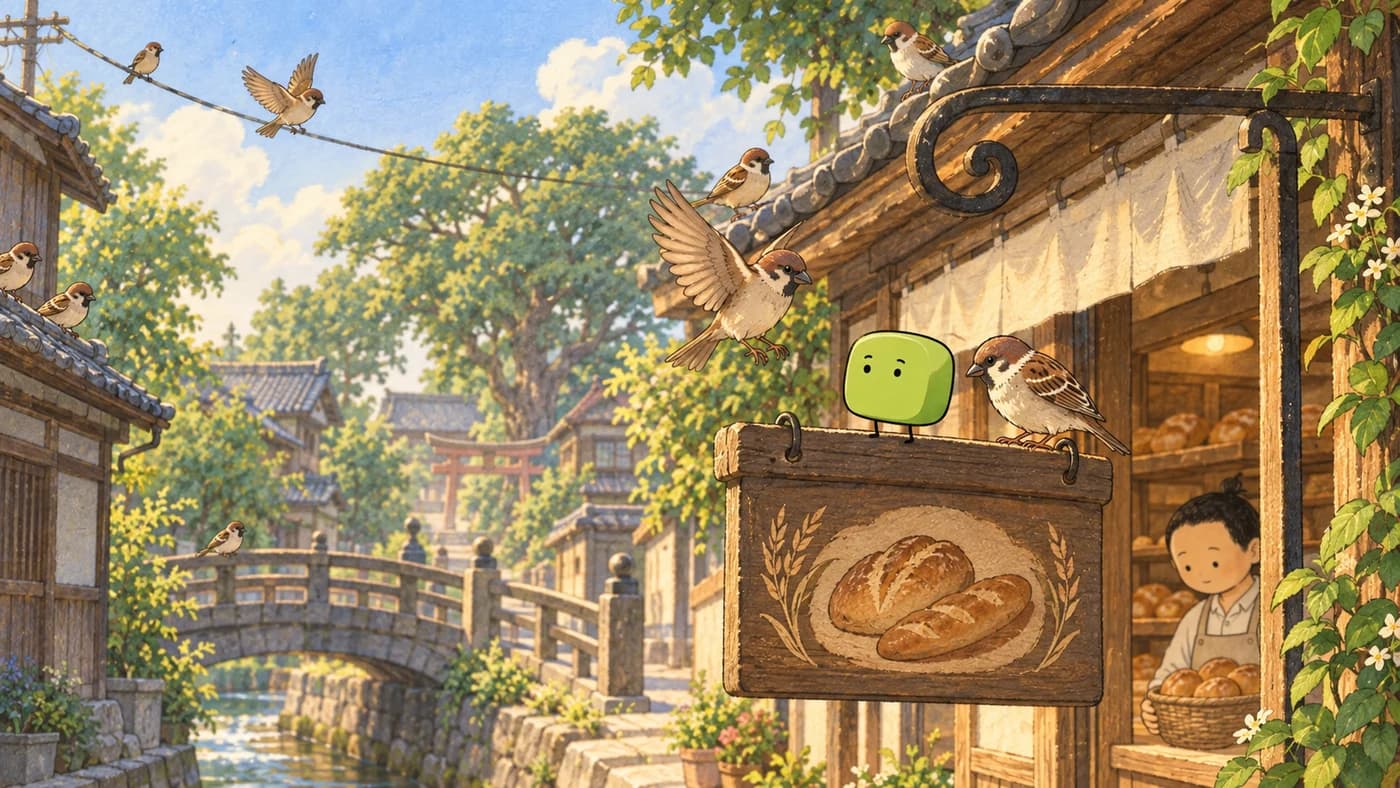
Chun is one sparrow. Chun is never, in practice, one sparrow. Where Chun lands, a hundred cousins land ten seconds later, and Ume-san’s morning crumb tray becomes a weather event. The first arrival is delicate: one small bird on the bakery sign, head tilted, waiting for the exact moment the door opens. Then the cousins arrive from three roofs, the shrine tree, and a telephone wire that nobody has ever seen used for telephone purposes.
The bakery queue takes sides. Some customers enjoy the fluttering. Others would like to see their shoes again. The pigeons file grievances in a low, indignant murmur. Ito-san stands ready with a notebook and no applicable laws. Ume-san moves the crumb tray left. The flock moves left. She moves it right. The flock moves right. Chun watches from the sign, apparently responsible for none of this.
Something must be done, and the street watches the café to see what it will be. Mutjo has no plan beyond keeping the kettle level. The Matji gather near the bread crate. Watje is the most standard-looking of them, a small green cube with two close eyes and two front eyebrows that rarely announce an opinion. Today the eyebrows are intent. Watje studies the sparrows’ chatter, the wingbeats, and the tiny rhythm made by crumbs striking the tray.
At eight exactly, Watje climbs the bread crate by leaning against its edge. It waits for the flock’s chatter to crest. Then it begins, one beat behind their rhythm, to bounce. Not wildly. Not impressively. Just steadily, with a soft rise and settle that repeats beneath the noise. Chun looks down. One cousin pauses. Another copies. The echo catches.
The flock, helpless before a better rhythm, falls into time. Wings open together. Heads dip together. The crumb tray empties in a neat musical sequence: flutter, peck, pause; flutter, peck, pause. The pigeons stop complaining because there is now a tune. Ume-san stands with a basket in her hands and watches her bakery become a concert hall. Ito-san writes performance regulated by rhythm, then crosses out regulated.
Watje continues one beat behind. Each time the sparrows speed up, Watje waits. Each time they scatter, Watje holds the pattern until one bird returns. Chun lands on the crate beside it, close enough to feel the small vibration through the wood. Watje does not look over. It is busy keeping time. Chun offers one bright chirp. The flock answers. The street hears the shape of cooperation before anyone names it.
By the end of the morning the crumb tray is empty in order, to music, and nobody has lost a shoe. Ume-san calls it the sparrow shift. Hara-san says the title is unnecessarily grand. A cousin in the departing flock gives one clear whistle. Ume-san asks Watje to return for the next shift. Watje settles beside the crate as if considering the appointment.
Before the next opening, Watje tests the bread crate with three measured bounces. Chun answers from the sign. A few early cousins gather on the telephone wire, shifting closer whenever the pattern repeats. By the time Ume-san sets down the tray, the first row of birds is already waiting for the pause between beats.
Watje’s rhythm changes with the weather. In rain it becomes slower, leaving space for each drop to strike the tray. In wind it becomes firmer, holding the pattern against every gust. Chun learns the variations and teaches them to the cousins. Ume-san starts setting out the tray five minutes early, not because she is anxious, she says, but because a concert deserves a proper sound check. The pigeons disagree with her title and attend anyway. At closing, Watje rests beside the empty tray. A single crumb remains under the crate. Chun drops to the ground, takes it, and leaves one pale feather in return. Watje watches the feather settle. The next morning, the performance begins at eight on the dot. Watje attends every performance, one beat behind, slightly better.